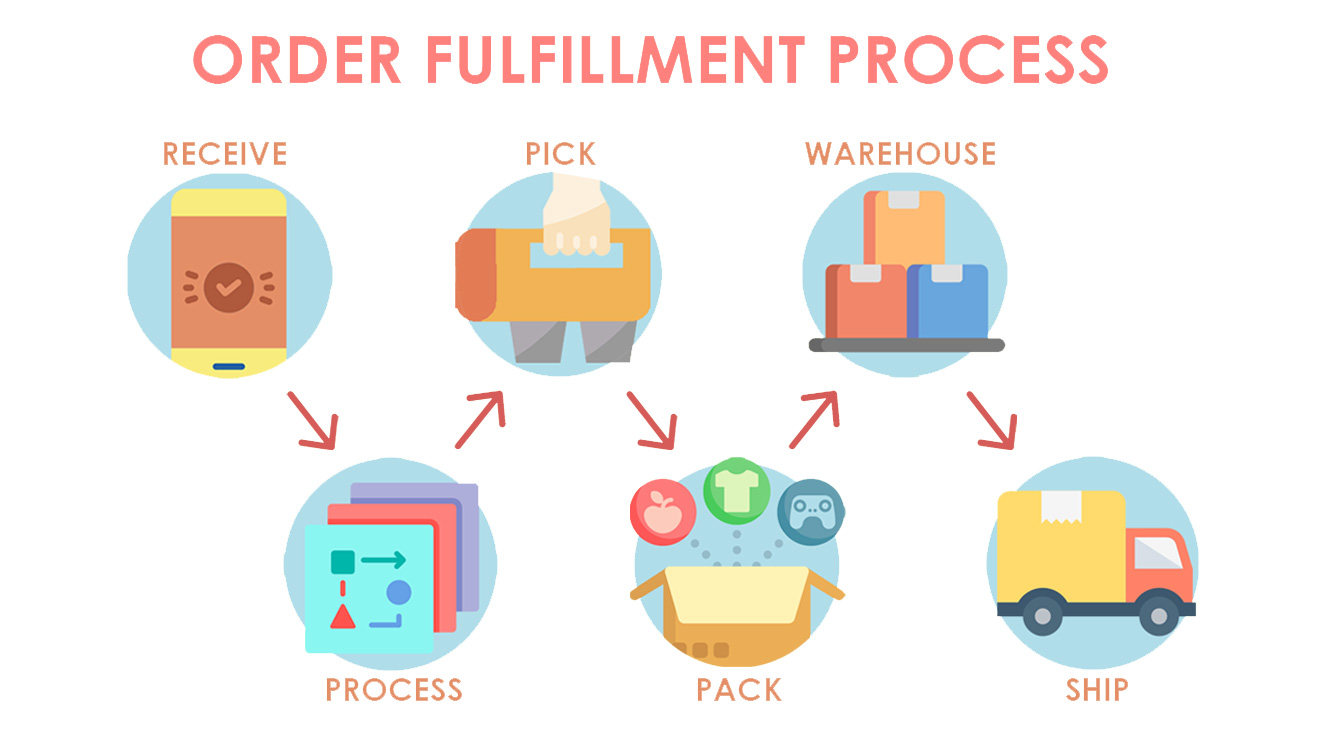
Businesses interested in enhancing speed, accuracy, and customer satisfaction need to reduce internal delays in handover during the fulfillment of orders. Any change of team like sales, warehouse, and shipping presents the possibility of delays, miscommunication, and errors. Unless such handovers are handled in the right way, they cause a bottleneck that slows the whole process. To solve these inefficiencies, it is important to learn the workflows, improve co-ordination and the appropriate application of technology in order to have smooth transitions between one stage and the other.
Understanding Handover Points
The initial process of minimizing delays involves determining the points of handovers and its effects on time schedules of fulfillment. These areas cover order confirmation, inventory allocation, picking, packing and dispatch. In every stage, there is a change of responsibility and unless the processes are clearly defined, activities may be postponed or skipped. Mapping these transitions assists businesses in identifying those areas where delays are most common and the cause of these delays.
When these handover points are seen, then one can analyze the root causes of inefficiencies. Delay can be due to ambiguous duties, missing information or manual procedures that need to be verified several times. Knowing these factors, businesses can start developing workflows that are as frictionless as possible and where every team gets the correct and timely information.
Enhancing Inter-Team Communication
Effective communication is important in minimizing delays in handovers. In cases where teams use disjointed systems or even unofficial updates, valuable information is lost. This creates cross-purposes and unwarranted interdepartmental communication. Standardization of communication protocols is important to have all teams aware of the kind of information needed to send an order to the next stage.
Technology can be of great help in enhancing communication. The use of tools like delivery management software enables the teams to have real time updates, which eliminates manual coordination. With the ability to view the status of the order together, the teams will be able to monitor the status and solve problems before they arise rather than responding to them later. Such a degree of transparency can remove delays due to miscommunication and incomplete data.
Unification Of Processes And Responsibilities
Efficient handovers require consistency in processes. By having the teams operate in different styles of taking orders, it enhances the chances of mistakes and time wastage. SOPs give clear directions on how things are to be done and at what point they are to be passed. This makes all orders pass through the system predictably and efficiently.
It is also important to define responsibilities. Every member of the team is expected to be aware of what is required before giving an order to the other level. This minimizes confusion and avoidance of duplication and omission of tasks. With a well defined process, it is also easier to train employees joining the firm and even keep things consistent as the business expands.
The Use Of Automation And Tools
Manual handovers may be considerably decreased with the help of automation. Order checking, inventory management, and shipment are some of the tasks that can be automated to maintain accuracy and speed. Businesses can also do away with delays due to human error and repetitions by minimizing manual intervention.
The incorporation of tools like route optimization software also helps to increase efficiency by making sure that the delivery planning process is aligned to the fulfillment processes. Once orders are handled and delivered, and with the consideration of optimized routes, it eliminates the last minute changes. This facilitates a seamless winding up of warehouse operations to delivery which reduces delays in the whole fulfillment chain.
Performance And Continuous Improvement Monitoring
The monitoring of performance indicators is necessary to discover current problems in the handover processes. Statistics on processing time between phases, error rates, and order complete times are useful in helping to identify areas of delay. Frequent check-ups enable the businesses to solve the issues fast and make evidence-based adjustments.
Constant improvement ought to be a life long endeavor. With the growth in order volume and the development of operations, new challenges will emerge. Frequently surveying workflows and receiving feedback from teams will assist businesses to improve their processes and remain efficient. With the emphasis on both performance monitoring and flexibility, companies will be able to keep the internal handover time to a minimum and keep the order fulfillment running efficiently.
To minimize internal handover in order fulfillment, a combination of clear processes, high level of communication and proper use of technology is necessary. By taking time to familiarize themselves with their workflows, responsibilities, and getting rid of inefficiencies, they develop a smoother and more dependable operation. Every enhancement at a point of handover helps to increase the speed of the processing time and reduces the number of errors throughout the fulfillment process.