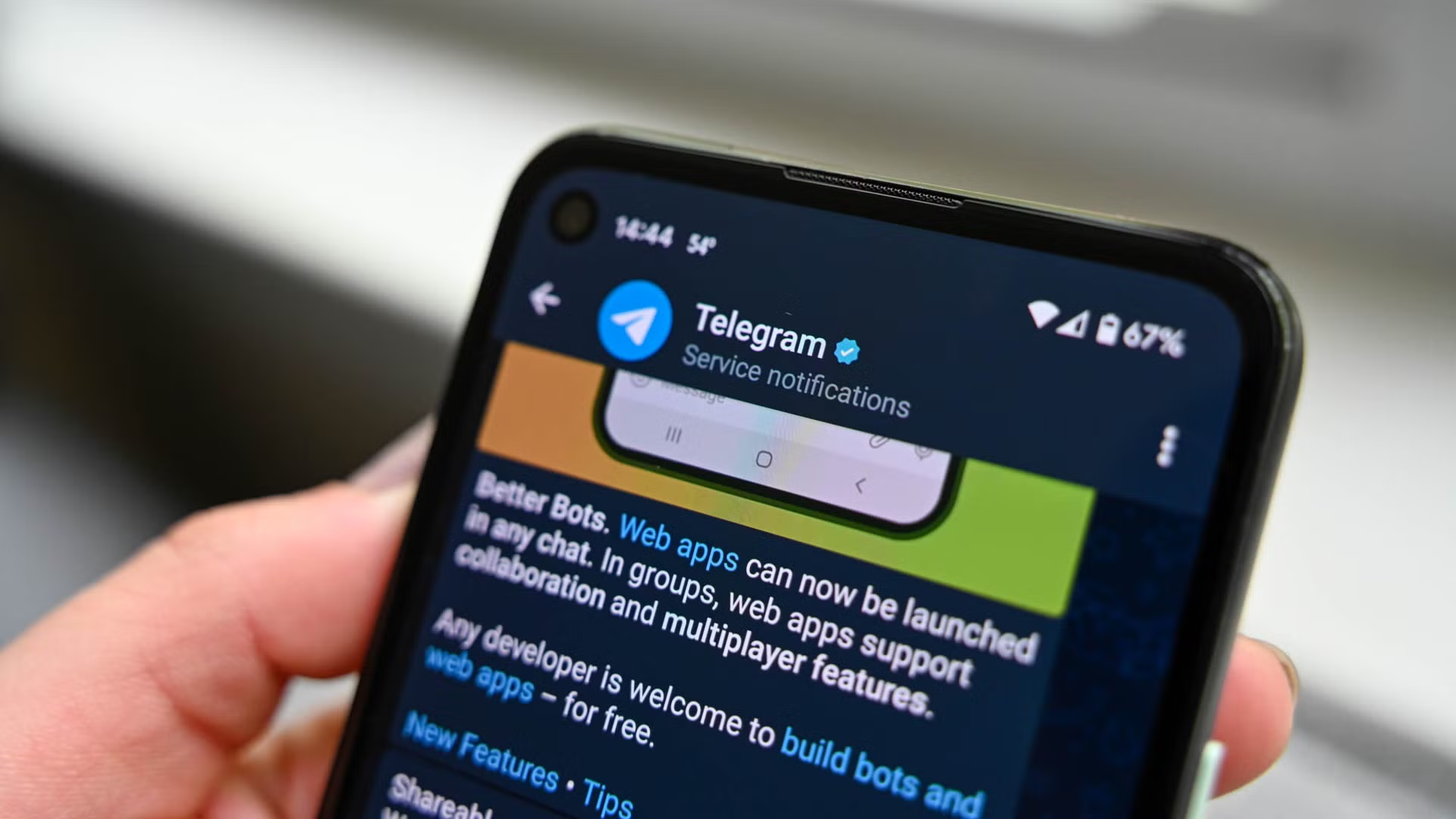
Telegram and WhatsApp are examples of successful journeys of messaging apps in the past decade. Messaging apps’ oldest form and most basic concept are tools to send, receive, and notify users of instant message (IM) services. Messaging apps send instant notifications; Telegram and WhatsApp advanced beyond this. Messaging apps today are advanced enough to include communication, collaboration, and content-sharing functions. They are no longer apps used only for conversations. They have become apps used for gathering information, organizing, and channeling one’s digital presence. Ease of use and access via telegram下载 or whatsapp网页版 makes communication via Telegram or WhatsApp much more efficient.
Initial Use: Notifications & Instant Messaging
The instant message (IM) services Telegram and WhatsApp services offer have helped them reach millions. IM services have helped Telegram and WhatsApp replace SMS (short message services) and email services (electronic message services). WhatsApp was launched in 2009, and Telegram arrived in the market four years later. In its early years, WhatsApp became known as an IM service and phone operational system (OS) service; It gained users due to its phone functional ease and message reliability. Users of Telegram found fault with the messaging service and replaced it with better alternatives, like better functional phone operational systems. Messaging apps replace email and SMS, so the apps provided the users with the ability to send, receive, and communicate without any costs. They received notifications and immediately joined. The telegram下载 and whatsapp网页版 services made it easy for users across the globe.
Communities Evolving Past Messaging
Both apps began adding tentative features after the user base started to steadily increase. Most notable of such features is Telegram’s channels and groups, which allow one to many communications and use case applications as small to medium sized news and update broadcasting channels. Communities began forming centering around shared interests, be it tech or hobbies.
WhatsApp countered with the inclusion of group chats, the sending of voice messages, and what would become huge with the inclusion of broadcast lists. Although people used group chats to meet with small social circles, these features allowed communities to expand to what would ultimately be called their purpose: community organizers Tools WhatsApp and Telegram became in what began as just simple chat applications.
The bottom line: Trust
What built the trust for both Telegram and WhatsApp to flourish was user data handling policy. Telegram utilizes the Secret Chats feature in combination with end to end encryption and cloud storage to create ease of access across devices. WhatsApp built privacy into their service by making end to end encryption apply to all to user chats by default.
With stronger privacy measures, users have felt more safe in community participation, idea exchange, and file sharing. Trust was also built through two-step verification and disappearing message features. Security and privacy combined with the ease of use of telegram下载 and whatsapp网页版, users feel more comfortable joining communities.
Features Driving Community Engagement
Both apps have introduced new features that enhance community building:
– Telegram Supergroups and Channels: Thousands of members can participate in discussions and polls and receive announcements.
– WhatsApp Group Chat and Broadcast Lists: Send messages to large groups while keeping their chats private.
– Sharing Media: Both apps allow community members to share photos, videos, and documents.
– Voice and Video Calls: Group users can create and participate in live discussions and meetings.
– Telegram Bots and Automation: Telegram users can use Bots to help manage communities and provide interactive experiences.
These features help communities stay connected and collaborate. Users can access these features from any device by downloading telegram or logging into whatsapp.
The Cultural Impact: How We Shape The World Around Us
Telegram and WhatsApp have changed not just how we message each other, but how we think about culture, politics, and even business. The ability to form communities on these platforms is game-changing. Users can organize events, promote social causes, and share their knowledge on a global scale. Small businesses and content creators have even used these platforms to interact with and inform their audience, promote their products, and offer customer support.
These simple notification apps have changed the way people communicate and interact. People use them to build thriving online communities.
The Future of Messaging Communities
The future of messaging communities will result in an even more integrated experience. Users can expect new and improved multimedia, more build tools, and new integrations to promote community building. AI, scheduled community events, and new moderation controls will all be a standard in message-based communities.
With telegram下载 and whatsapp网页版 messaging communities will remain accessible to everyone, even new users. Messaging apps will continue to shape the world. The more users, the stronger the app.
Conclusion
The development of Telegram and WhatsApp is impressive. They went from being simple notification apps to community platforms. They provide their users with safety and innovative services and have become places to connect and build global communities. Their services are revolutionary to digital communication and are vital in the users’ personal and professional life. Whether you use telegram下载 or whatsapp网页版 you are distributing the services that revolutionized digital communication and the communities that built with it.