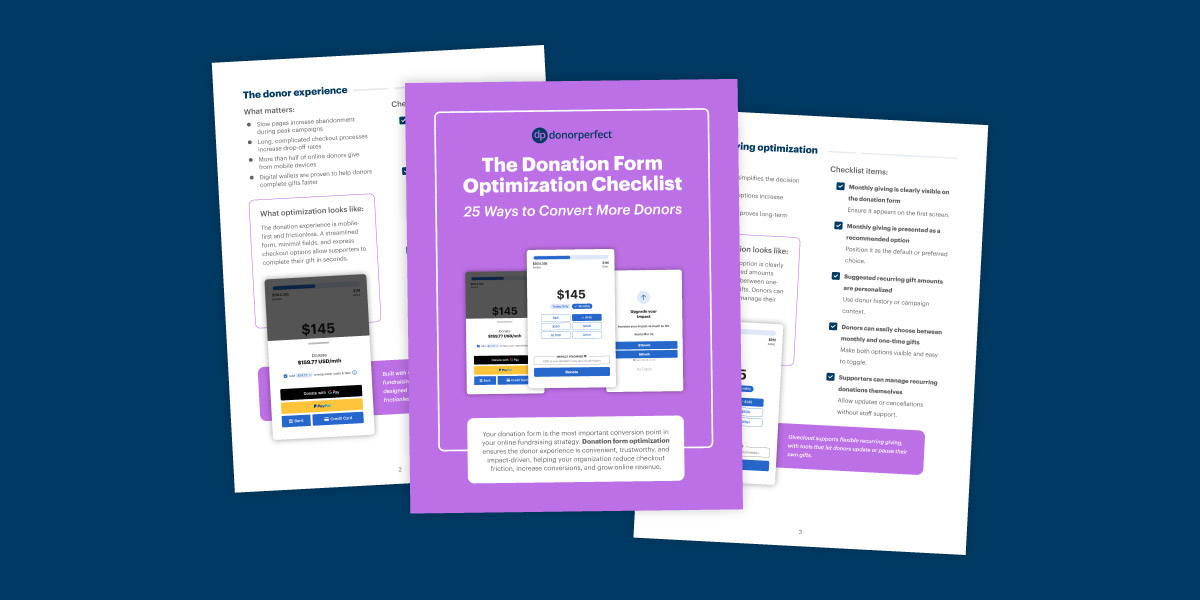
Online donation forms are the center of attention when it comes to solicitation of recurring and campaign funds by nonprofits. Many potential donors get frustrated in the process before making a contribution when the process is inconvenient or requires too many steps. These forms can be enhanced with emphasis on layout, clarity, and user flow, which are crucial in the website design of nonprofits. Organizations may improve the form and eliminate barriers to enhance successful submissions and enhance long term involvement with supporters.
Form Simplicity
Simplified donation form minimizes indecisiveness and assists the user to make his/her contribution within a short time. Requesting only necessary details including name, email and amount of donation will avoid frustration and reduce the abandonment rates. The addition of each new field imposes cognitive load particularly on the first time donors. The simplified layout also helps in adhering to the principles of the website design for nonprofits that value clarity and ease of navigation. Maintaining the experience to minimal makes it so that the focus is on giving and not administration.
The ability to label clearly and sequence logically enhances usability as users are not lost in any step. Keeping related fields together and not allowing extra formatting choices is helpful in keeping the focus. Auto fill functions and intelligent defaults help save time on filling out the form. When the donors sense that the process is efficient, they will tend to complete the process. This solution supports the objectives of site design to meet the needs of nonprofits where accessibility and user centered design are priority considerations in digital experiences.
Payment Options
Provision of a variety of payment options is an important element in enhancing donation rates. There are various donors and restricting them may lead to loss of donations. Acceptance of credit cards, debit cards, digital wallets, and direct transfers enhance flexibility and accessibility. A properly organized payment system ensures that the users are able to carry out transactions in the manner that they prefer without being interrupted. This is fundamental in contemporary nonprofit website design techniques that accentuate minimizing friction at key conversion points.
The integration of payment solutions should be balanced in terms of security and convenience. Stickers and easily identifiable payment symbols will aid in fostering trust at checkout. Redirects should also be kept to a minimum and the donor retained in a uniform interface. The more seamless the transition between the completion of forms and payments confirmation, the more likely are successful donations. Such a good experience builds confidence in the organization and digital presence.
Trust and Security
The key factor determining an online donation is the trust of the user. Donors should be assured that their personal and financial data is secure. Showing signs of secure connections and privacy protection aids in lessening reluctance. Confidence is also achieved through open communication on how funds are spent. All these factors come into play to produce reliability that promotes increased rates of completion.
Credibility is supported by such design decisions as uniform branding and professional design. Users will also doubt the validity of a donation page that does not seem to be part of the entire site. The use of recognizable design elements and stylistic consistency throughout the pages contribute to the authenticity. This is one of the principles of effective digital communication of nonprofit organizations.
Mobile Optimization and Testing
A huge percentage of users today make donations using mobile gadgets and responsive design is a necessity. The forms should be able to adapt to various screen sizes without losing their functionality or clarity. Buttons are to be easy to tap and text must not have to be zoomed to be readable. The fact that mobile users are able to complete donations without any hassle directly enhances the completion rates.
Periodic testing and monitoring of performance can be used to detect areas where there is friction in and during the process of donation. The research of A/B experiments with various designs and the study of user behavior can point to areas of improvement. The donation experience is optimized continuously to make it efficient with time. Such continuous improvement helps in enhancing deeper participation and higher fundraising success.