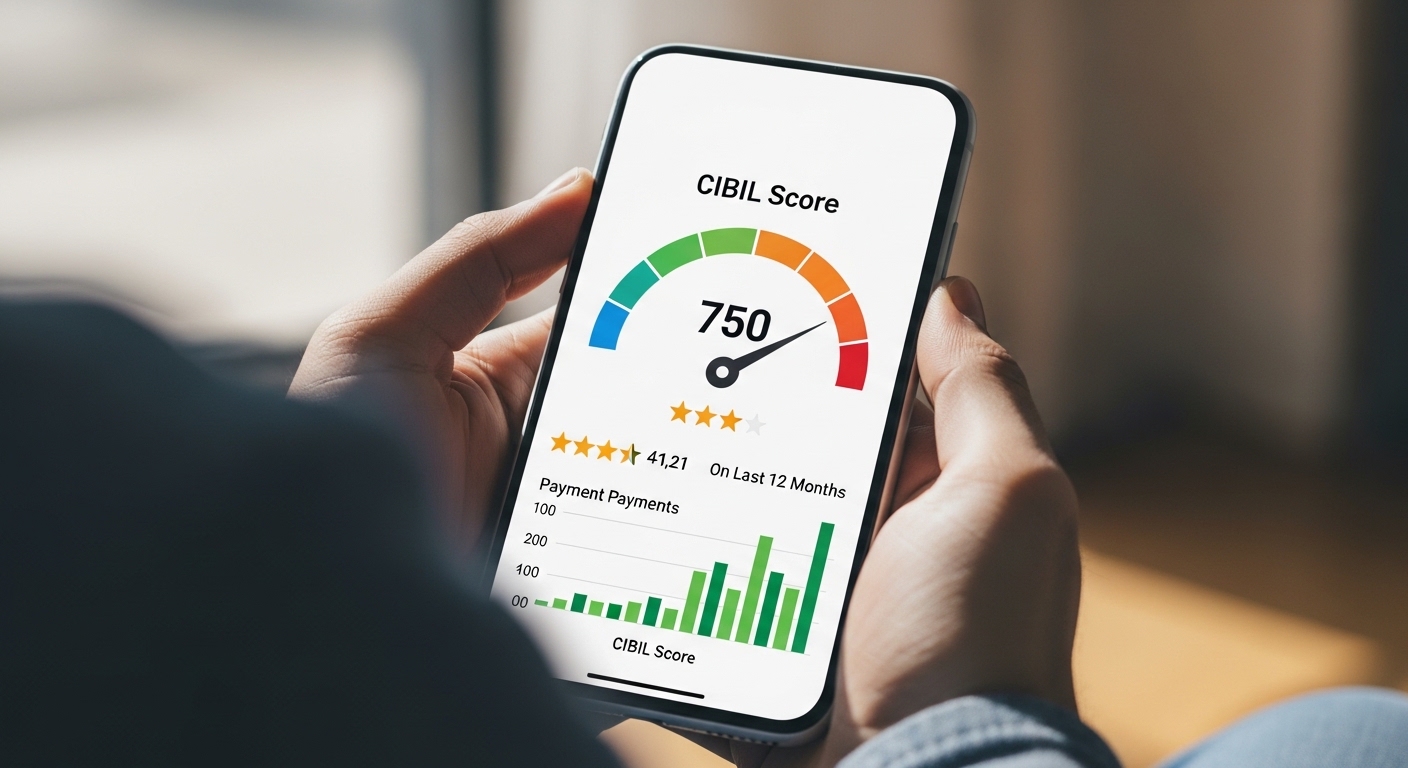
The CIBIL score is one of the initial things that lenders look for when considering your application for a loan or credit card. This score shows your past credit behaviour to banks. It affects loan approval, interest rate, and credit limit. In India, banks like HDFC Bank, SBI, ICICI Bank, Axis Bank, and NBFCs such as Bajaj Finserv and Tata Capital focus on this score during loan approvals.
Most people think the score drops only after missed EMIs. In reality, several factors affect it over time. Behavior related to repayment, credit card usage, loan applications, and even inaccuracies in reporting can influence the score. Knowing these helps avoid surprises during loan checks.
What Is a CIBIL Score?
CIBIL score is a three-digit number between 300 and 900 based on your credit report. It is calculated from your credit report, which includes loans, repayments, credit card usage, and active accounts.
CIBIL Score Range and What It Means:
| CIBIL Score Range | Category | What It Means for You |
| 750 – 900 | Excellent | Easy loan approval, lower interest rates, higher credit limits |
| 700 – 749 | Good | Loan approval likely with standard terms |
| 650 – 699 | Average | Approval possible but may need higher interest rates or checks |
| 550 – 649 | Low | Loan approval becomes difficult, limited credit options |
| Below 550 | Poor | High rejection chances, needs credit rebuilding |
Banks don’t see your income first. They see this number first. The score changes based on repayment and credit usage. On-time payments and controlled credit usage improve the score over time. Late payments, high credit usage, and frequent borrowing can reduce the score.
Payment history is the most important factor, carrying the highest weight of 35% in score calculation. Credit utilization accounts for 30%, length of credit history 15%, credit mix 10%, and credit enquiries 10%.
How Does Payment History Affect Your CIBIL Score?
Payment history is considered to be one of the key determinants of the CIBIL score. The lenders would like to determine if the borrower pays off EMIs and credit card bills on time. Even small delays stay visible in your credit report for years. As per RBI-regulated credit reporting norms under CICRA guidelines, even a 30–60 day delay in EMI repayment is recorded in your credit report. The following problems may influence the repayment history:
- Missing EMI payments
- Delayed credit card bills
- Paying only minimum dues regularly
- Loan settlements
- Written-off accounts
Timely payments show up cleanly in your repayment record. People who pay on time usually see fewer negative entries in their report.
Why Does Credit Utilization Matter?
Credit utilization refers to how much of the total credit limit has been used. It is mainly related to the use of credit cards. For instance, if someone has a credit limit of ₹1 lakh on an ICICI Bank credit card but uses ₹70,000 regularly, then his/her credit utilization percentage would be 70%.
High usage is clearly visible in your credit report, even if payments are on time. Lenders notice when most of the limit is used every month. Keeping usage low gives your credit profile more balance. Financial experts advise using less than 30% of the available limit.
Even if timely payments are made, consistently utilizing most of the available credit could have a negative impact on your score. Keeping usage low keeps your report cleaner and helps improve CIBIL score over time.
Can Multiple Loan Applications Reduce Your CIBIL Score?
Every time an individual applies for credit or a loan, the financial institution accesses the credit report. This causes a hard enquiry in the report. It is okay to have one or two enquiries on the report; however, complications arise if the number of applications increases within a short period. This typically happens when borrowers:
- Apply to multiple lenders together
- Keep applying after rejection
- Use instant loan apps frequently
- Search repeatedly for pre-approved offers
This is especially common when applying across NBFCs like Bajaj Finserv, Tata Capital, or IIFL Finance within a short period. Too many enquiries in a short time signal heavy borrowing activity in the report. Repeated applications can bring down the score and affect approvals.
How Does Credit Mix Influence Your Profile?
Credit mix refers to the type of loans and credit accounts that an individual handles. It should have a combination of both secured loans, such as home and car loans, alongside unsecured loans, such as personal loans or credit cards. Having only one type of credit does not show full repayment behaviour. Lenders prefer to see how different types of loans are handled over time. However, taking loans just to improve the mix does not improve your score. The credit mix is normally good if it has:
- Home loans
- Vehicle loans
- Credit cards
- Personal loans
Indian lenders such as SBI, HDFC Bank, and private NBFCs check how different loans are being managed in your report. It does not mean one has to apply for multiple loans to boost their profile. What matters is repayment behaviour, not how many accounts you have.
Why Is Credit History Length Important?
The age of credit accounts also affects the score. A longer account history gives lenders more repayment data to look at. It shows how repayment behaviour has changed over time. Individuals with older accounts and consistent payment history generally build strong credit profiles. Older accounts give lenders more repayment history to evaluate. Even inactive accounts continue to matter if they are in good standing. Closing old accounts too early can reduce your average credit age.
Individuals who have just started borrowing might have lower scores since they lack repayment history. Most Indian lenders prefer at least 2–3 years of stable credit history before offering higher loan limits.
It is possible that immediately closing older credit cards could lower your average account age and might have an impact on your CIBIL score. A strong credit profile usually takes 2-3 years of on-time payments to build.
Can Errors in Credit Reports Affect Your CIBIL Score?
Not all credit problems arise from failures to repay. Sometimes loans are shown incorrectly even when they are already closed. Banks rely completely on what is reflected in the credit report, not verbal confirmation. Even small mismatches between lender data and bureau records can create issues during approval. Some frequent mistakes in credit reports are:
- Closed loans marked active
- Incorrect overdue amounts
- Duplicate accounts
- Unauthorized enquiries
- Wrong personal details
Most users only notice these errors after a loan rejection. In many cases, the rejection happens first, and the report issue is discovered later. That delay often makes corrections more difficult during urgent loan applications. Even a single incorrect entry can affect approval decisions. These mistakes are more common than most borrowers expect. They can affect loan approval even when payments are on time. That’s why reviewing the complete report is important rather than just the credit score.
How to Improve CIBIL Score Over Time
It is not possible to improve CIBIL score instantly. Every action you take with credit gets recorded and updates gradually over time. Lenders usually compare behaviour over months, not days. Most score changes show up in 3-6 months, not days. Some practices include:
- Paying EMIs before due dates
- Keeping credit utilisation low
- Avoiding unnecessary loan applications
- Maintaining older accounts properly
- Checking the credit report regularly
Even one missed EMI in the past can take time to stop affecting the score. Old negative entries do not disappear quickly, even if recent behaviour is good. That is why consistency matters more than quick corrective actions. These habits improve how your repayment history appears in your report. Consistency matters more than short-term corrections. The majority of good CIBIL scores are built through consistency rather than short-term fixes.
Why Monitoring Your Credit Report Matters
Most people will only glance at their score but neglect the full report. The report gives critical information concerning your past payment record, any ongoing loan accounts, credit enquiries, and account status that lenders review carefully.
Check your credit report on Oolka
Credit reports often contain hidden issues that are hard to detect manually. Oolka uses AI to scan your full credit profile, flag inconsistencies in accounts, repayment records, and enquiries, and guide you on what needs attention. It continuously monitors changes in your report so you can understand what is affecting your credit behaviour without manually reviewing every detail.
Key Takeaways About CIBIL Score
A CIBIL score in India shows your past credit behaviour and is checked by banks like HDFC Bank, SBI, and ICICI Bank before approving loans. Repayment history, credit usage, loan enquiries, account age, credit mix, and report accuracy all affect loan approval.
A good credit score comes from simple actions done consistently. These include paying EMIs on time, keeping usage low, borrowing only when needed, and checking your report regularly.