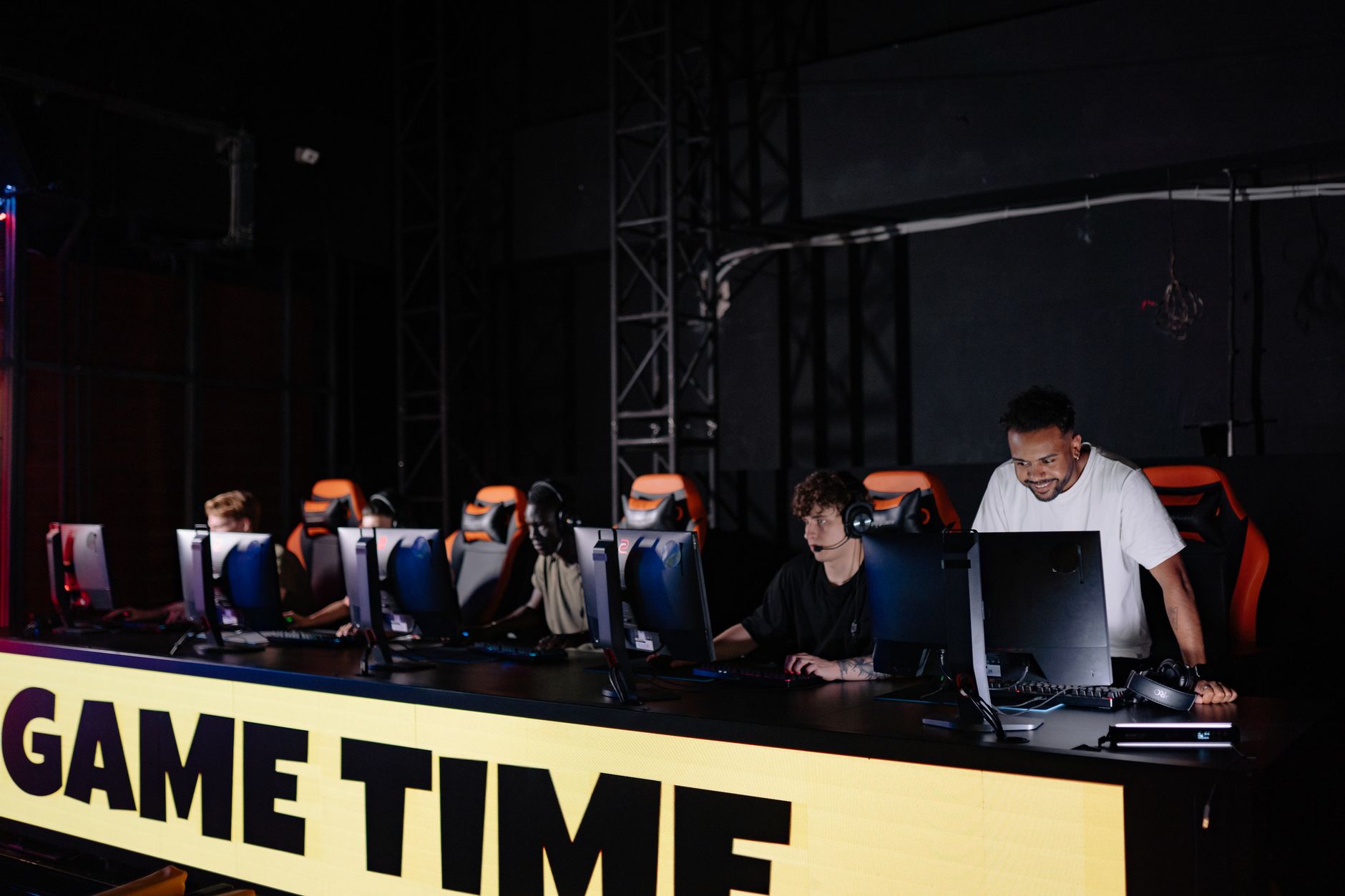
A live video appears on a screen. A dealer sits behind a table, cards are dealt, information updates beside the video, and the entire process seems almost effortless.
That apparent simplicity is deceptive.
Behind a modern live baccarat table is a collection of technologies working at the same time. Cameras capture the physical table, video systems compress the footage, servers distribute the stream, software processes game information, and an interface presents everything on devices that may be thousands of kilometers away.
All of this needs to happen quickly enough that the experience still feels live.
The technical challenge is not simply transmitting a video. Television broadcasters have been doing that for decades. The difficult part is combining video with an interactive digital interface while keeping multiple pieces of information synchronized in real time.
Live baccarat therefore sits at an unusual intersection of broadcasting, web development and interactive entertainment.
Understanding what happens behind the screen reveals just how much engineering can be hidden inside something that appears so straightforward.
The Physical Table Is Still the Starting Point
Despite all the technology involved, many live baccarat experiences begin with something extremely traditional: a physical table.
A dealer works in front of cameras inside a studio or, in some cases, a casino environment designed for broadcasting.
The cards and table are real physical objects.
This creates the fundamental distinction between live baccarat and a fully computer-generated version. Instead of software creating every visual element, technology acts as a bridge between a physical event and a remote audience.
That bridge starts with cameras.
Studios can use several camera positions to provide different views. One may show the dealer and the wider table, while another provides a closer view of the cards.
The exact production setup varies, but the objective remains consistent: viewers need to understand what is happening without physically standing beside the table.
Lighting also matters.
A studio that looks bright to the human eye may not necessarily look good through a camera. Reflections on cards, shadows across the table and inconsistent exposure can make important details difficult to see.
The physical environment is therefore designed partly for people and partly for machines.
Turning a Camera Feed Into Internet Video
Raw video contains an enormous amount of data.
Sending an uncompressed high-definition camera feed directly to thousands of devices would be impractical for ordinary internet connections.
The video needs to be compressed.
Video codecs reduce the amount of data required while attempting to preserve acceptable visual quality. This is the same fundamental process that makes streaming films, video calls and online broadcasts practical.
Compression always involves trade-offs.
More aggressive compression can reduce bandwidth requirements but may lower visual quality. Higher-quality video looks sharper but requires more data and can create problems for users with slower connections.
The ideal balance varies according to the network.
This is where adaptive streaming becomes useful.
Instead of sending exactly the same video quality to everyone, streaming systems can provide multiple versions. A strong connection can receive a higher-quality stream, while a weaker connection can switch to a lower bitrate.
The goal is not simply maximum resolution.
The goal is continuous video.
A slightly softer image is often less disruptive than constant buffering.
Latency Is the Invisible Problem
When watching a prerecorded film, a delay of several seconds between the server and the screen usually does not matter.
The viewer has no reason to know that the movie is arriving slightly later than it could.
Live interactive content is different.
Delay, commonly discussed as latency, becomes important because events are happening in real time.
Imagine that a card has already been dealt at the studio, but the viewer does not see it until several seconds later. If the interface updates independently from the video, information on the screen could appear before the viewer visually sees the event occur.
That creates confusion.
The experience no longer feels synchronized.
Reducing latency requires attention throughout the delivery chain. Video capture, encoding, server processing, network routing, decoding and the user's device can each add small delays.
No single optimization solves everything.
The system has to manage the entire journey from camera to screen.
Video and Data Travel Together
A live baccarat interface communicates more than moving images.
Alongside the video, users may see Player and Banker cards, current totals, table status, previous outcomes and other information.
This data needs to correspond with the physical table.
If the dealer reveals a card, the digital interface should recognize and represent that event correctly.
Platforms can use different technologies and operational processes to achieve this synchronization.
The important point is that the video stream and the interface are not entirely separate experiences.
They are two representations of the same event.
One is visual.
The other is structured data.
The system must keep them aligned closely enough that the user experiences them as one product.
This requirement makes live baccarat technically more complicated than ordinary livestreaming.
A concert stream can continue even if an information panel beside the video is slightly delayed. An interactive table requires much tighter coordination between what viewers see and what the interface communicates.
Software Has to Understand the Table
A physical dealer understands the cards naturally.
Software needs structured information.
Systems therefore require a way to translate events at the table into data that the platform can process.
The implementation can vary between providers. Specialized equipment, sensors, card-reading systems and operational verification processes may all form part of the technical environment.
Once the relevant information enters the system, software can use it to update the interface.
Card values can appear digitally.
Player and Banker totals can update.
Previous results can be added to historical displays.
The end user may see these changes as simple animations or numbers on a screen.
Behind them is a process of turning a physical event into machine-readable data and distributing that data to many connected devices.
One Table Can Reach Many Locations
A physical baccarat table has a natural capacity limit.
Only so many people can comfortably occupy the surrounding space.
Streaming changes that relationship.
The physical event can remain in one location while the audience becomes geographically distributed.
This is a familiar feature of broadcasting. A football match takes place inside one stadium but can be watched around the world.
Interactive streaming adds another layer because viewers are not merely receiving video. Their devices also communicate with platform servers.
That requires scalable infrastructure.
If a small number of people are connected, a system may perform comfortably. If demand increases suddenly, servers and distribution networks need to handle the additional traffic without creating unacceptable delays.
Modern internet infrastructure often addresses this through distributed systems.
Instead of requiring every viewer to receive data from one distant server, content can be delivered through infrastructure located closer to different regions.
Reducing the physical network distance can improve performance and reliability.
For บาคาร่า, this infrastructure is largely invisible, but it strongly influences whether a live table feels immediate or frustrating.
The Browser Has Become a Powerful Application Platform
Early websites were primarily documents.
They displayed text, images and links.
Modern browsers are capable of far more.
They can play high-quality video, maintain real-time connections, run sophisticated interfaces and adapt layouts dynamically according to screen size.
This evolution has reduced the need for users to install dedicated desktop software for many online services.
A baccarat interface can operate directly inside a modern browser while still behaving much more like an application than a traditional webpage.
That creates advantages for accessibility.
A user can move between devices without necessarily learning completely different software.
But browser-based development also creates compatibility challenges.
Different operating systems, screen dimensions, browser engines and hardware configurations can behave differently.
Developers therefore need to test across a broad range of environments.
Something that works perfectly on a powerful desktop computer may perform differently on an older smartphone.
Supporting both is part of the engineering challenge.
Mobile Devices Add Another Layer of Complexity
A desktop computer usually has several advantages for streaming.
It may have a large display, stable power supply, strong processor and fixed broadband connection.
Smartphones operate under different conditions.
Battery consumption matters.
Devices can become warm during extended video playback.
Mobile connections may switch between Wi-Fi and cellular networks.
Signal quality can change as the person moves.
The screen is also much smaller.
A live baccarat platform therefore cannot treat mobile simply as a scaled-down desktop experience.
Video delivery needs to be efficient. Interface animations should not unnecessarily consume processing power. Important controls need to remain usable on touchscreens.
Developers also have to consider interruptions.
A phone call may arrive. The user may switch to another application. The browser might temporarily move into the background.
A robust web application needs to handle these ordinary mobile behaviors without becoming unstable.
Synchronization Matters More Than Spectacle
Digital products often compete visually.
Sharper video, elaborate animation and sophisticated graphical effects are easy features to advertise.
But in real-time applications, reliability can matter more than spectacle.
A beautifully animated interface that constantly loses synchronization creates a worse experience than a simpler interface that behaves predictably.
This is particularly true when several systems depend on each other.
Suppose the video stream remains stable but game information stops updating. The user sees the physical table but loses the digital context.
Alternatively, imagine that data continues updating while the video freezes.
Neither situation is ideal because the product depends on both layers working together.
Engineering teams therefore have to monitor more than server availability.
They may need to track streaming health, network latency, data synchronization, error rates and performance across different devices.
The smooth experience visible on screen is the result of many systems being prevented from failing visibly.
Why Interfaces Show Historical Results
Digital platforms can store and display information far more easily than physical tables.
This is why modern baccarat interfaces often contain visual records of previous Player and Banker results.
Technically, these displays are straightforward examples of data visualization.
The system already receives structured information about completed rounds. It can organize those outcomes and represent them visually.
For users, this creates a convenient record of what happened previously.
But the availability of more data does not change the underlying nature of chance.
A screen might show a long sequence of one result. That historical pattern does not guarantee that the next round will continue or reverse it.
Technology can record outcomes with remarkable efficiency.
It cannot convert a random future event into a certain prediction.
This distinction becomes increasingly important as interfaces become more sophisticated. Professional-looking charts can make information feel more predictive than it actually is.
Data visualization is useful for describing the past.
Its appearance should not be confused with knowledge of the future.
Security Exists Behind the Interface Too
Any modern platform that manages accounts or personal information has security responsibilities.
Users usually interact with only the visible side of these systems: login forms, password fields and account pages.
Behind those interfaces are authentication processes, encrypted connections, server controls and monitoring systems.
The basic security principle is similar across many types of online services.
Sensitive information should not travel across networks unnecessarily exposed, account access should be protected, and systems should be designed to reduce unauthorized activity.
Security is also an ongoing process rather than a feature installed once.
Software dependencies change. New vulnerabilities are discovered. Attack methods evolve.
Maintaining an online service therefore requires updates, monitoring and operational procedures in addition to the original development work.
For users, the practical lesson is simpler: digital entertainment platforms should be approached with the same account-security habits used elsewhere online, including strong unique passwords and available authentication protections.
International Services Have to Think Locally
Streaming may make geography feel irrelevant, but infrastructure still exists in physical locations.
Distance between servers and users can affect latency.
Local internet quality varies.
Device preferences differ between markets.
Languages and regulatory environments differ as well.
A service intended for an international audience therefore cannot assume that every user has the same technical environment.
Localization goes beyond translating menus.
Developers may need to optimize delivery for different network conditions, support regional formats and ensure that the service operates according to applicable local requirements.
Online gaming rules can vary substantially between jurisdictions, so availability in one location does not imply availability everywhere.
The internet is global.
The people and laws connected to it remain local.
Responsible Design Is Also a Technical Feature
Technology is often discussed in terms of what it enables.
It is equally important to consider what it helps users control.
Digital entertainment can be available continuously, particularly on mobile devices. That convenience makes tools related to personal limits increasingly relevant.
Depending on the platform and jurisdiction, responsible-use systems may include time reminders, account limits, activity information or self-exclusion options.
These features require technical implementation just like streaming or account management.
They need databases, interface components and rules that function reliably.
Their value also depends on accessibility.
A control buried several layers deep inside account settings is less useful than one users can understand and locate easily.
Baccarat remains a chance-based game regardless of how advanced the streaming technology becomes. Faster networks and better interfaces can improve presentation, but they cannot eliminate uncertainty from the outcome.
Technology should therefore support informed use rather than create an illusion of control over random results.
The Most Advanced Technology Is Often the Least Visible
Users do not normally open a live baccarat table to think about codecs.
They do not want to calculate network latency, inspect server architecture or wonder how physical cards become structured data.
They expect the video to play.
They expect information to update correctly.
They expect controls to respond.
That is what makes real-time technology interesting.
Its success is often measured by how little attention it demands.
When everything works, cameras, encoders, servers, distribution networks, databases, browsers and interfaces disappear behind a single coherent experience.
The user sees a table.
The engineering team sees an interconnected system.
Live baccarat demonstrates how far internet technology has developed. What once would have required specialized broadcasting equipment and one-way television distribution can now be combined with interactive software and delivered to ordinary consumer devices.
The table may still look traditional.
Behind the screen, almost nothing about it is.