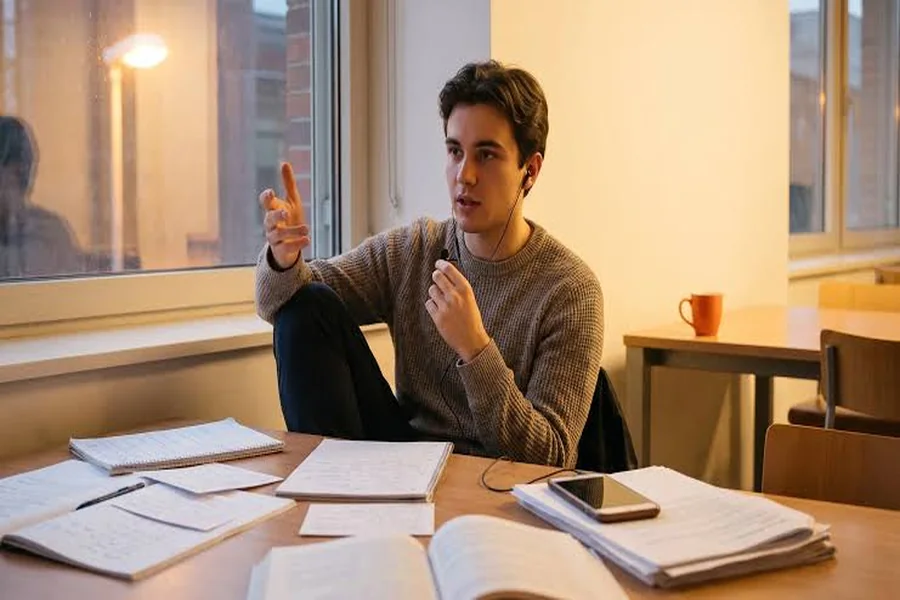
For years, much of a student’s grade has come off the page: essays, problem sets, and timed written exams. A teacher reads the work, grades it, and evaluates what the student appears to understand. Generative AI has made that process more complicated. A chatbot can produce a plausible essay in seconds, leaving instructors with questions about how much of a submitted assignment reflects the student’s own understanding. One response is older than the laptop: ask the student to explain the work out loud.
Oral exams never disappeared entirely, but some instructors are giving them renewed attention. For students accustomed to demonstrating knowledge primarily through written assignments, answering questions in real time can require a different kind of preparation.
Why the Oral Exam Is Coming Back Now
Instructors face a challenge that has grown more pressing with the availability of generative AI. A polished essay or completed problem set doesn’t necessarily reveal how independently a student arrived at the answers.
A Washington Post report describes professors turning to oral assessments as one way to evaluate students’ understanding. Rather than relying exclusively on submitted work, instructors can ask students to explain their reasoning, defend conclusions, and respond to follow-up questions. The appeal is straightforward. A conversation allows an examiner to explore how a student thinks through a problem, not just what appears in the final answer.
Oral exams aren’t foolproof measures of knowledge or academic integrity, and they introduce challenges involving grading consistency and accessibility. Still, they give instructors another way to assess learning when written assignments alone may provide an incomplete picture.
Speaking About a Subject Takes Practice
A student can understand a concept well enough to recognize the right answer on a page but struggle to explain it clearly without notes. Written assignments allow time to organize ideas, revise sentences, and check information. An oral exam asks students to retrieve knowledge, structure an explanation, and respond to questions in the moment.
Those are skills that improve with practice.
That is one reason working with a private tutor can be useful when preparing for assessments that involve spoken explanations. A tutor can ask a student to describe a concept, challenge an incomplete answer, and follow up until the reasoning becomes clearer.
The same approach can benefit students preparing for written exams. Explaining material aloud often reveals gaps in understanding that rereading notes may not expose.
Start Preparing Before the Exam Arrives
Students don’t need to wait until an oral assessment appears on the calendar to practice explaining what they’ve learned. A few consistent habits can make spoken responses feel more natural.
- Explain the lesson aloud. Spend a few minutes after studying describing the main ideas without looking at notes. Ask a parent, friend, or tutor to question anything unclear.
- Rehearse difficult questions. For each topic, identify questions that require more than memorized definitions. Practice answering them aloud while keeping explanations focused.
- Record and listen. A short recording can reveal rushed explanations, repeated filler words, or points where the reasoning becomes difficult to follow.
- Practice recovering. When an answer isn’t immediately obvious, learn to pause, ask for clarification if needed, and explain what you do understand rather than guessing.
The goal isn’t to memorize a speech. It’s to become comfortable organizing ideas while speaking and adjusting an answer when new questions arise.
Is This a Fair Way to Assess Every Student?
Oral exams have limitations that deserve attention alongside their benefits. Students with certain disabilities, language-related challenges, or significant test anxiety may find the format particularly demanding. Examiner behavior can also influence how consistently students are assessed.
A recent analysis in The Conversation discusses fairness concerns surrounding oral assessments, including differences in questioning and the challenges of evaluating responses consistently. Clear grading rubrics, comparable questions, appropriate accommodations, and examiner training can help address those concerns. Recording assessments or using multiple examiners may also be appropriate in some settings, particularly when the stakes are high.
For students, the preparation remains useful regardless of whether their next assessment is written or spoken. Understanding a subject well enough to explain it, defend an answer, and respond thoughtfully to questions is a skill worth developing.
The oral exam may be receiving renewed attention because of AI, but the ability to explain what you’ve learned has never gone out of date.