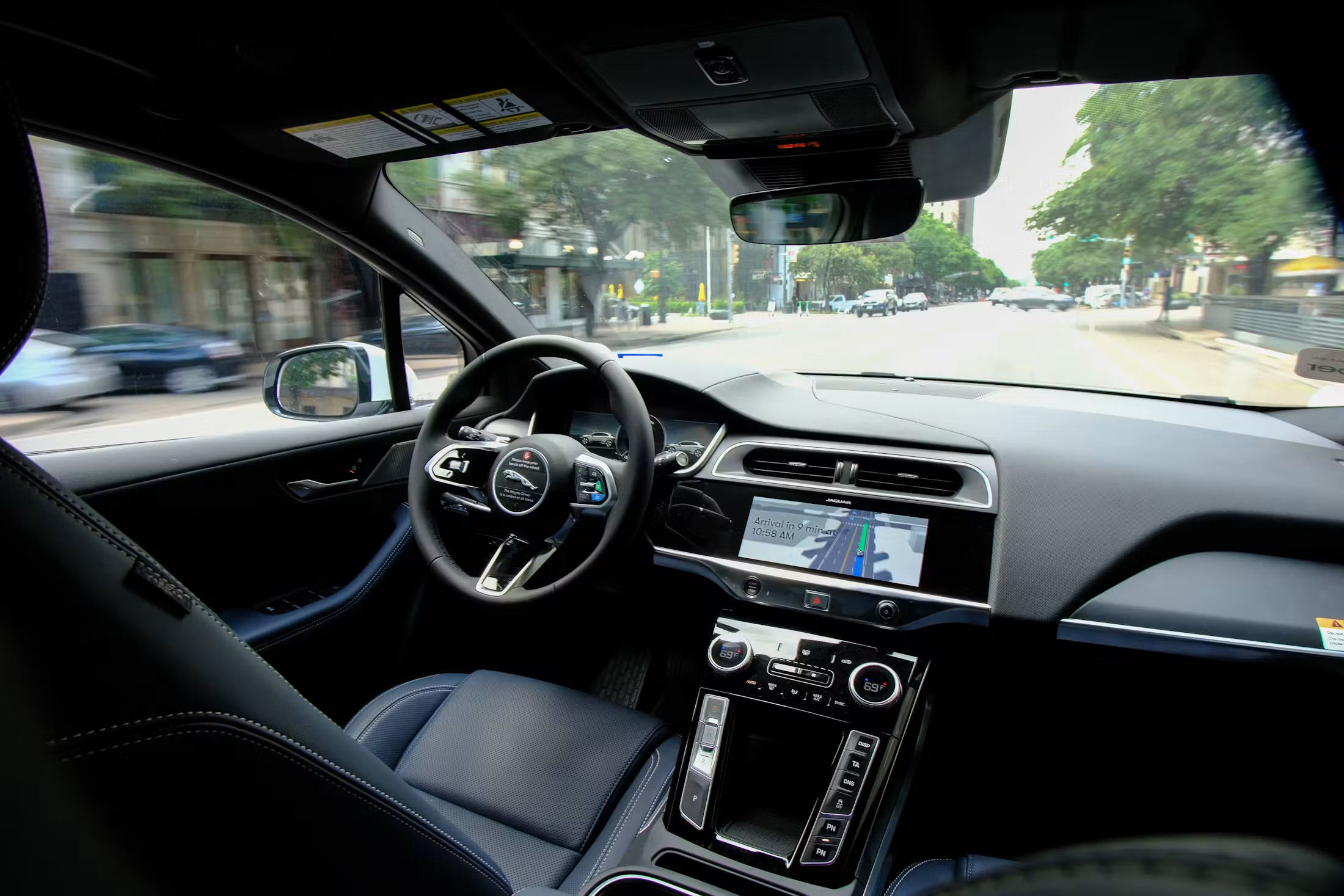
Accidents involving commercial rideshare platforms present unique evidentiary and insurance obstacles that do not exist in standard motor vehicle claims. When a rideshare vehicle collides with another car or strikes a pedestrian, establishing financial recovery requires untangling a multi-layered insurance structure that fluctuates based on the driver’s active digital status within the mobile application. Insurance adjusters representing rideshare companies frequently exploit technical ambiguities—such as whether the driver was waiting for a ride request or actively navigating toward a passenger—to deny coverage or push financial liability onto personal auto policies. Injured passengers, third-party drivers, and pedestrians routinely face severe medical bills, lost wages, and conflicting statements from competing insurance representatives. Resolving these coverage disputes requires securing electronic app data, proving driver status under California Insurance Code rules, and establishing clear third-party fault.
When confronting claim denials or negotiating complex settlement demands following a rideshare collision, retaining an experienced uber accident attorney ensures that commercial insurance carriers are held accountable under applicable state laws. Specialized litigators at The Law Office of Brent D. Rawlings analyze digital server logs, obtain driver GPS history, and file formal claims to secure full compensation for medical treatment and economic losses.
Establishing exact app activity status prevents corporate insurers from shifting financial exposure onto inadequate personal auto policies. Early legal intervention preserves electronic telemetry, protecting the rights of injured victims throughout the claims process.
Tiered Insurance Coverage Mechanics Under California Transportation Laws
Navigating financial recovery after a rideshare crash requires applying California Insurance Code Section 5433, which divides rideshare operations into three distinct coverage phases. Phase One applies when the driver has the application open but has not yet accepted a ride request. During this phase, contingent liability limits apply—specifically fifty thousand dollars for bodily injury per person, one hundred thousand dollars total per accident, and thirty thousand dollars for property damage—which only activate if the driver’s personal policy denies coverage.
Once a driver accepts a ride request (Phase Two) or carries a passenger inside the vehicle (Phase Three), primary commercial liability coverage increases dramatically to one million dollars. In Phase Three, mandatory uninsured and underinsured motorist coverage also protects passengers if a hit-and-run driver or an uninsured third-party motorist causes the crash. Commercial insurance adjusters often attempt to reclassify Phase Two or Phase Three crashes as Phase One incidents to minimize corporate liability. Subpoenaing digital dispatch logs and trip time-stamps provides the objective proof needed to enforce the higher one-million-dollar policy limits.
Furthermore, analyzing cellular network activity determines whether distracted driving contributed to the collision. Proving that a driver was improperly interacting with the mobile app while operating the vehicle establishes clear negligence under California motor vehicle codes.
Multi-Party Fault Allocation and Corporate Negligence in California Courts
Resolving claims stemming from a rideshare collision frequently involves allocating fault among multiple negligent drivers. If a negligent third-party motorist broadsides a rideshare vehicle, both the third party’s personal insurer and the rideshare company’s underinsured motorist policy share potential financial responsibility. Defense attorneys utilize California’s pure comparative fault principles to assign percentages of blame among all involved parties, attempting to reduce their client’s total financial payout.
Additionally, rideshare corporations routinely claim that drivers are independent contractors to shield the corporate entity from direct vicarious liability. Overcoming these legal defenses requires investigating independent corporate negligence, such as negligent driver hiring, inadequate background checks, or failing to deactivate drivers with known safety violations or driving infractions. Demonstrating that a platform permitted an unsafe driver to accept fares establishes direct corporate liability beyond standard vicarious liability frameworks.
Ultimately, holding corporate rideshare platforms and insurance carriers accountable after a serious collision demands rigorous evidence collection, precise statutory application, and strategic trial preparation. Partnering with dedicated legal counsel ensures that injured victims navigate complex multi-party litigation effectively, securing the financial resources necessary for complete medical recovery and long-term financial stability.