There’s a specific kind of frustration that hits around 11 PM, when you’re three hours into editing a 90-second clip, your timeline has 47 layers, your laptop fan sounds like a jet engine, and you’ve forgotten what the original cut was supposed to feel like. Anyone who’s used traditional NLEs like Premiere or DaVinci Resolve knows this exhaustion. The software is powerful, but the learning curve and the sheer time investment have priced out the people who need video the most: solopreneurs, course creators, freelance marketers, and small content teams.
The good news is that 2026 has quietly become the year the editing workflow finally got rebuilt around how most people actually work, not how Hollywood post-production teams work.
Why a Prompt-Based AI Video Editor Changes the Math
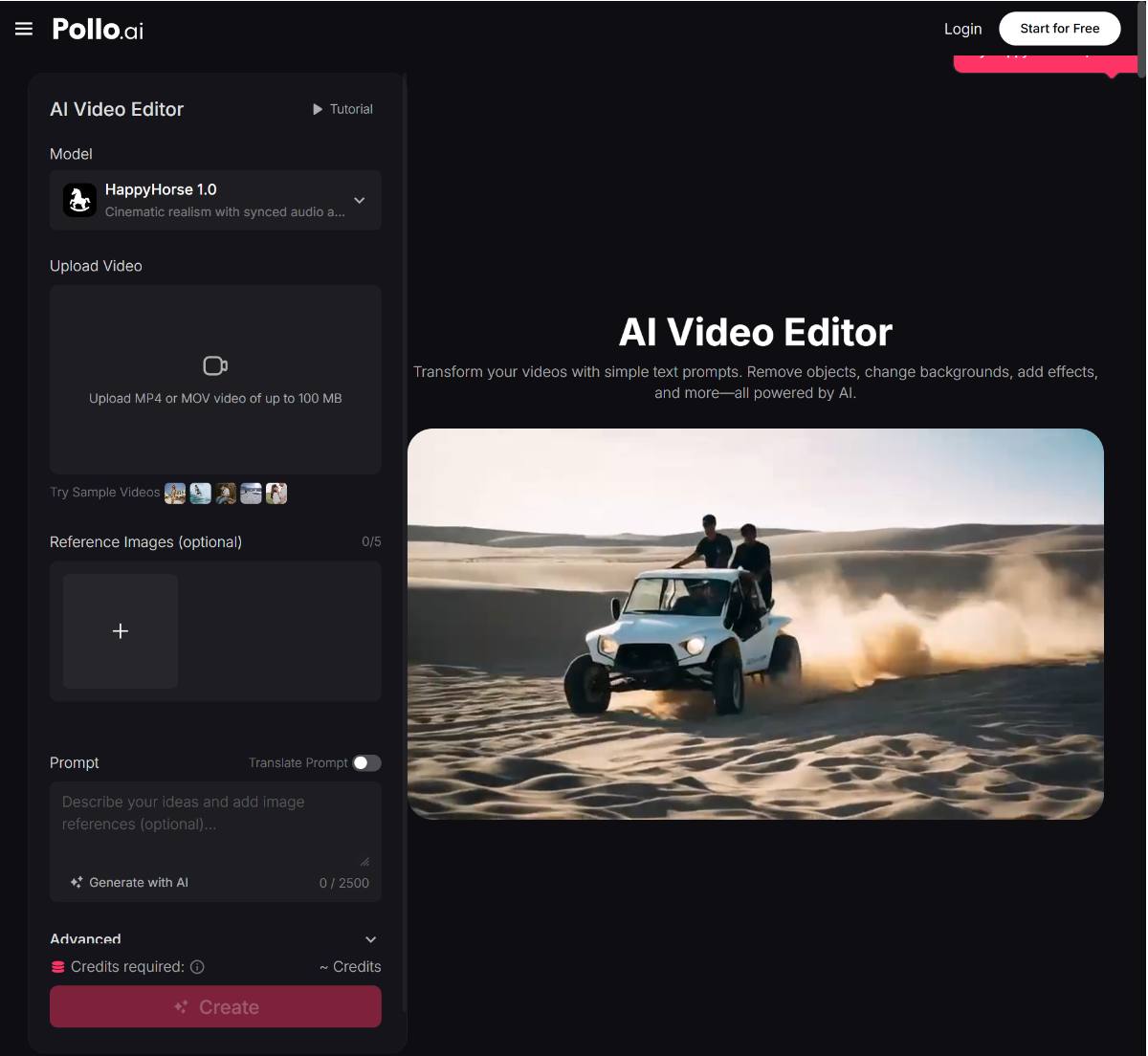
The single biggest shift this year is the move from timeline-based editing to instruction-based editing. Instead of dragging clips, setting in-and-out points, and stacking adjustment layers, you describe what you want and the tool executes it. Pollo AI’s video editor is a clean example of this approach, you upload your footage, type something like “trim the dead air at the start, add captions, color-grade for a warm cinematic look,” and the edit happens in the background while you work on something else.
What makes Pollo AI worth paying attention to is that it doesn’t try to replace your creative judgment, only the mechanical parts of the job. You still decide what story you’re telling and which moments matter. The tool handles the busywork: silence removal, jump-cut smoothing, subtitle generation, format conversion, color matching across clips shot on different cameras. The parts that used to eat 80% of your editing time now eat 10%.
For solo creators, this changes the economics of publishing. A weekly YouTube video that used to require a full Saturday now fits into a Tuesday evening. A daily TikTok routine that used to require batching becomes genuinely sustainable. The bottleneck shifts from production capacity to idea quality, which is exactly where it should be.
What Modern AI Editing Actually Does Well in 2026
Let’s get specific about where AI editing has matured and where it still needs human oversight, because the marketing hype around these tools often glosses over the nuance.
Automatic rough cuts are genuinely useful now. Upload an hour of raw interview footage, ask for a 3-minute highlight reel, and you’ll get something 70% of the way there. You’ll still want to fine-tune the selections, but the heavy lifting of finding the strongest soundbites is done.
Caption generation is essentially solved. Accuracy across English, Spanish, German, Japanese, and Hindi is now reliable enough that you can publish without proofreading most clips. Styled captions that match brand fonts and animate in sync with speech used to require After Effects skills, now they’re a checkbox.
Color matching across mixed footage works. If you’ve shot the same scene on an iPhone and a Sony mirrorless, AI color matching can normalize the look in a way that used to take a skilled colorist 20 minutes per clip.
Background music selection is hit or miss. AI can suggest tracks that match the energy of your edit, but the suggestions still feel generic. This is one area where human curation still wins.
Complex narrative pacing still needs you. No tool understands why a particular pause lands emotionally or why cutting on a specific word changes the meaning of a sentence. The craft of editing as storytelling is still very much a human skill.
How This Compares to Other Tools Worth Knowing
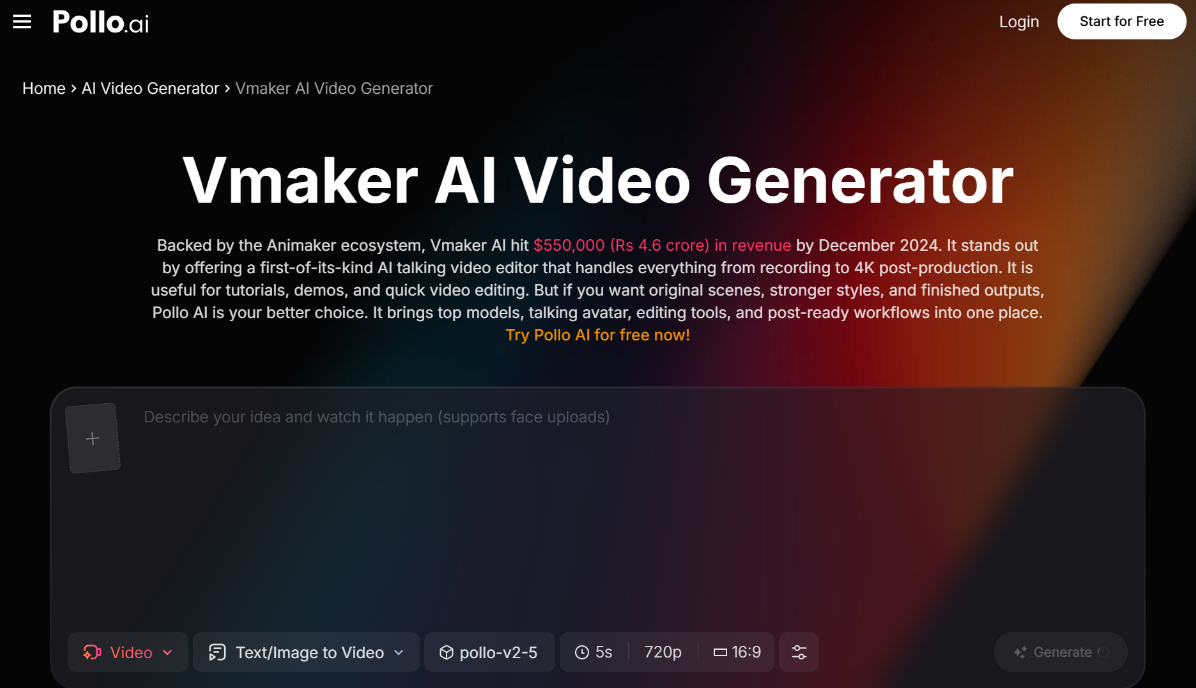
Before settling on any one tool, it’s worth understanding the landscape. Pollo AI maintains a useful breakdown of Vmaker AI and how it stacks up against other editors in the space, which is a good starting point if you’re evaluating options. Vmaker has carved out a strong niche around screen recording combined with AI editing, which makes it particularly useful for software demos, course creators, and SaaS marketing teams who need to turn product walkthroughs into polished deliverables.
A few other tools worth knowing about on the same platform: the text-to-video generator is useful when you need supporting footage you didn’t shoot, the image-to-video tool turns static brand assets into short motion clips for social, and the AI video enhancer handles upscaling and noise reduction for older footage you want to repurpose. Each addresses a slightly different gap, so the right pick depends on whether you’re starting from raw footage, static images, or text alone.
A Practical Workflow for Weekly Publishing
If you’re a solo creator or a small team trying to maintain a consistent publishing rhythm, here’s a workflow that actually holds up over months, not just weeks.
Record loosely. Don’t worry about perfect takes or clean transitions. Modern AI editors handle removing filler words, dead air, and false starts automatically, so the pressure to nail every take in-camera disappears.
Batch your editing sessions. Instead of editing one video end-to-end, queue up four or five at once. Upload them all, set your editing instructions, and let the tool process in parallel while you focus on writing thumbnails, titles, or descriptions for next week’s content.
Keep a style template document. Write down your standard editing instructions, caption fonts, color tone, intro length, music energy level, and reuse them across videos. This is what gives a channel visual consistency without requiring you to remember every preference each time.
Always do a final human pass. Skim through the AI-generated edit at 1.5x speed and watch for awkward cuts, mispronounced captions, or moments that lost emotional weight. Five minutes of human review catches the things automation still misses.
Where This Goes Next
The creators winning right now aren’t the ones with the most sophisticated editing skills, they’re the ones who’ve figured out how to use AI to maintain a publishing pace that compounds. Two videos a week for a year beats one polished masterpiece every quarter, and the tooling has finally caught up to make that pace sustainable for solo operators.
If you’ve been putting off launching a channel, a podcast, or a content series because the editing felt overwhelming, the obstacle has genuinely shrunk. Pick one piece of footage you’ve been sitting on, run it through a modern AI editor, and see how far you can get in an afternoon. The barrier between idea and published video has never been thinner, and the creators who internalize that this year are the ones who’ll have built real audiences by the time everyone else catches on.