What Is Mantrailing and How Does It Compare to Other Scent Sports?
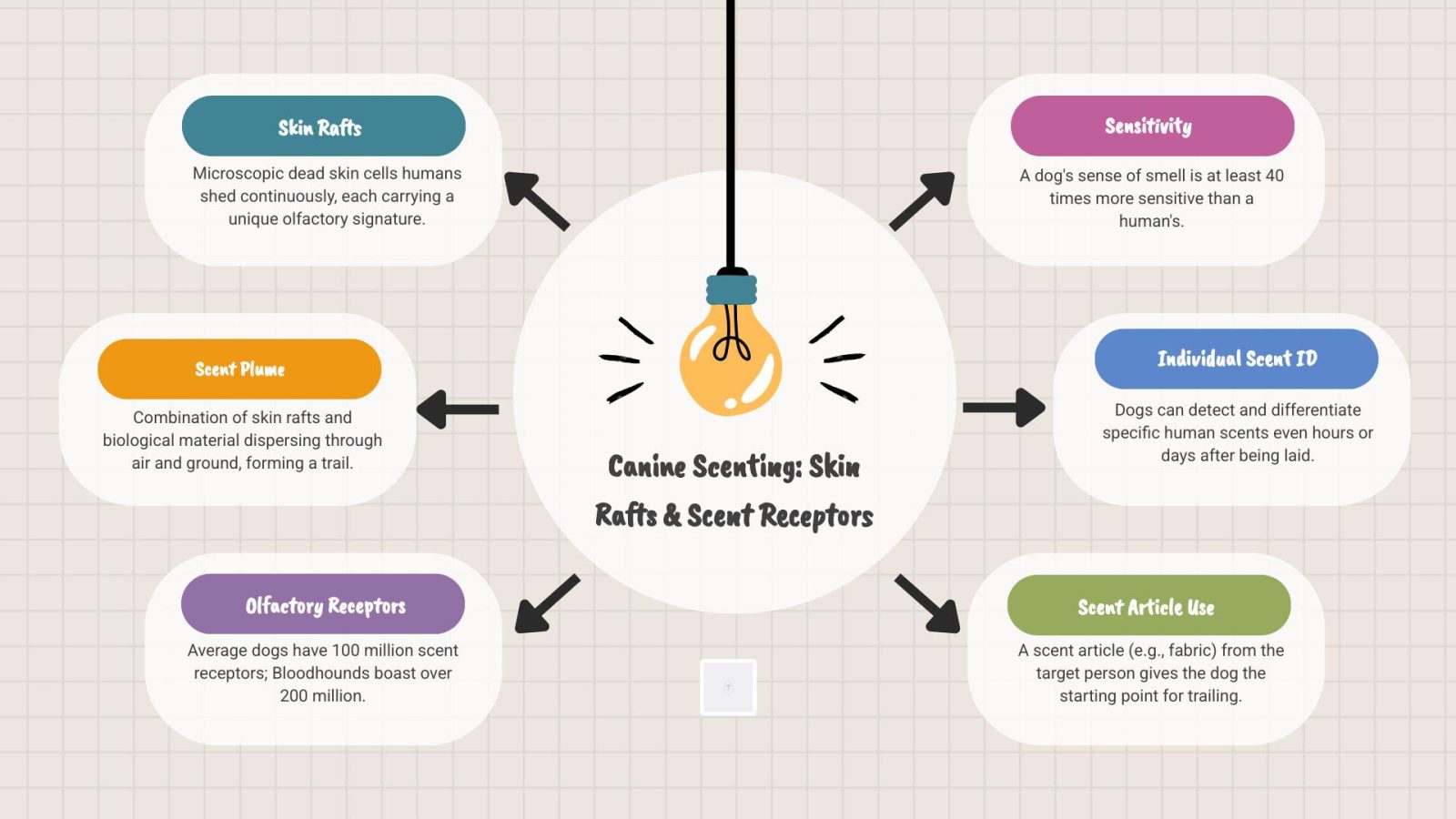
Mantrailing is a specialized form of scent work where a dog is trained to find a specific individual by following their unique scent trail. Unlike other scent activities, mantrailing dogs are focused solely on locating a particular person, using a scent article belonging to that individual as their starting point. The scent itself is composed of microscopic "skin rafts"—dead skin cells that humans constantly shed, carrying our unique olfactory signature. These skin rafts, along with other biological material, create a distinctive scent plume that dogs can follow through the air and on the ground.
Our canine companions possess an extraordinary sense of smell, far surpassing our own. A dog's olfactory system is at least 40 times more sensitive than a human's, with some breeds like Bloodhounds boasting over 200 million scent receptors, double the average dog's 100 million. This incredible biological advantage allows them to detect and differentiate individual human scents even hours or days after they've been laid.
To better understand mantrailing, let's compare it to other popular canine scent sports:
Feature Mantrailing Tracking Nosework / Scent Detection Objective Find a specific hidden person Follow precise ground disturbance/footsteps Detect specific trained odors (e.g., essential oils) Scent Source Unique human scent (skin rafts) Ground disturbance, crushed vegetation, foot scent Specific trained odor source Search Mechanics Air-scenting and ground-scenting, flexible path Nose to ground, follows exact path Systematic search for odor source in various environments Starting Point Scent article from target person Start flag on initial footprint Handler directs to search area, no specific start article Indication Finding the person (intrinsic reward) Finding dropped articles or reaching end of trail Specific alert behavior (e.g., freeze, sit, paw) Environment Highly varied: urban, rural, wilderness, indoor Varied: fields, woods, sometimes urban Varied: containers, interiors, exteriors, vehicles Leash Use Long line (15-20 ft) on harness Long line (10-40 ft) on harness Off-leash or short leash, depending on context Trail Age Can be hours to days old Typically fresh (minutes to a few hours) Odor source is static or recently placed Scent Theory: Air-Scenting vs. Ground-Disturbance Tracking
The fundamental difference in how dogs work scent lies in air-scenting versus ground-disturbance tracking. Traditional tracking dogs are trained to follow the precise path of footsteps, keeping their noses close to the ground to detect crushed vegetation, disturbed soil, and residual scent left directly on the surface. This method is highly precise but can be slower and more challenging in environments where ground disturbance is minimal or non-existent.
Mantrailing dogs, on the other hand, primarily utilize air-scenting. They lift their noses to detect airborne scent particles, allowing them to follow a "scent cone" that drifts with atmospheric currents. This enables them to work faster and across varied terrains, including paved areas, through water, or even where the target may have been carried by wind. While they primarily air-scent, skilled mantrailing dogs will also drop their noses to the ground to work scent pools or areas of higher concentration, seamlessly switching between techniques based on environmental factors like wind direction, temperature, and humidity. These environmental conditions significantly influence how scent disperses and lingers, making each trail a unique puzzle for the dog to solve.
Mantrailing Sport vs. Search and Rescue Operations
While mantrailing as a sport draws heavily from the methodologies used in professional Search and Rescue (SAR) operations, their objectives differ significantly. Sport mantrailing is purely recreational, focusing on the enjoyment, mental stimulation, and bond-building aspects for the dog and handler team. It offers a low-pressure environment where the primary goal is to have fun and allow the dog to engage in a natural, instinctual behavior. Participants can work towards various trial titles, such as Mantrailer (MT), Mantrailer Intermediate (MTI), and Mantrailer Excellent (MTX), which are recognized by organizations like the American Bloodhound Club. These titles demonstrate proficiency in trailing under increasingly complex conditions (older trails, distractions, varied terrain).
In contrast, SAR mantrailing is a critical, life-saving discipline. Dogs and handlers undergo rigorous, extensive training and certification to meet operational standards required for locating missing persons in real-world emergencies. SAR teams operate under immense pressure, and their findings can have legal implications. While the core principles of trailing are the same, SAR operations demand a much higher level of precision, reliability, and handler expertise in diverse, often dangerous, environments. Sporting titles do not qualify a team for professional SAR work, but they provide an excellent foundation and a rewarding way to engage in this fascinating activity.
Why Relationship-Based Dog Training and Mantrailing Go Hand in Hand
Mantrailing is not just about a dog following a scent; it's a dynamic partnership built on trust, communication, and mutual understanding. This makes it an ideal activity for those who practice relationship-based dog training. In mantrailing, the handler learns to truly observe and trust their dog's incredible olfactory abilities, fostering a deep connection where the dog leads the way. The handler's role shifts from directing to supporting, becoming an interpreter of their dog's subtle cues and a facilitator of their natural instincts. This collaborative approach strengthens the bond in profound ways, as both partners learn to rely on each other in a shared mission.
Core Principles of Relationship-Based Dog Training and Mantrailing
At its heart, relationship-based dog training emphasizes understanding a dog's individual needs, motivations, and communication signals, building a partnership founded on respect and positive reinforcement. These principles are perfectly mirrored in mantrailing:
- Handler Observation: Success in mantrailing hinges on the handler's ability to keenly observe their dog's body language. Subtle changes in tail wag, ear position, head carriage, and sniffing intensity all communicate whether the dog is "on scent," "lost scent," or working through a puzzle. This deep observation enhances the handler's understanding of their dog far beyond typical obedience cues.
- Natural Drive and Intrinsic Rewards: Mantrailing taps directly into a dog's innate hunting and searching drives. The primary reward is often the act of finding the person itself, reinforced by high-value treats or toys delivered directly by the "found" individual. This intrinsic motivation makes the activity incredibly self-reinforcing and enjoyable for the dog.
- Clear Communication: While the dog leads, the handler provides crucial support through consistent cues, line handling, and environmental awareness. A loose line allows the dog freedom to work, while subtle tension or slack can communicate guidance without interference.
- Emotional Safety: Mantrailing is typically conducted in a controlled, positive environment, minimizing stress and maximizing enjoyment. This focus on emotional well-being is a cornerstone of relationship-based training, ensuring the dog feels secure and confident in their work.
Implementing Relationship-Based Dog Training and Mantrailing for Reactive Dogs
Mantrailing offers a unique and highly beneficial outlet for reactive or socially anxious dogs. These dogs often struggle in environments with other dogs or unfamiliar people, leading to stress, fear, or aggression. Mantrailing, however, allows them to engage in focused, individual work in a controlled setting.
Here's how it helps:
- Individual Runs: Each dog works independently, typically with only their handler and the hidden "trailer" present. This eliminates the pressure of interacting with other dogs or being in a busy group.
- Confidence Building: Successfully finding a person, especially when starting with familiar individuals, builds immense confidence. The dog learns they can achieve a goal using their own abilities, which translates to a more secure demeanor in other situations.
- Stranger Neutrality: As dogs progress, they learn to find unfamiliar people. Because the focus is entirely on the scent and the task, the dog often becomes more neutral to the presence of strangers, viewing them as part of the "game" rather than a threat.
- Sensory Fulfillment: Reactive dogs often have excess energy and mental stimulation needs. Mantrailing provides intense olfactory processing, which is profoundly tiring and satisfying, helping to regulate arousal levels and reduce anxiety.
By focusing on the dog's natural abilities and providing a safe, engaging outlet, mantrailing can be a powerful tool in helping reactive dogs build confidence and find calm.
Essential Equipment and Setup for Beginner Mantrailing
Getting started in mantrailing requires minimal, yet specific, equipment to ensure both the dog's comfort and the handler's ability to support them effectively. The right gear facilitates freedom of movement for the dog and clear communication for the team.
Here’s what you’ll need:
- Non-Restrictive Harness (Y-Harness): This is perhaps the most crucial piece of equipment. A Y-shaped harness that allows full range of motion for the dog's shoulders and neck is essential. It should fit snugly but comfortably, without chafing or restricting breathing or movement.
- Long Line (15-20 feet): A sturdy, lightweight long line (often made of biothane or nylon) is necessary. This length provides the dog with enough freedom to work the scent without the handler being directly on top of them, while still maintaining control.
- Scent Article Containers: You'll need small, sealable bags (like Ziploc bags) to store and present scent articles, preventing contamination.
- High-Value Reinforcers: Plenty of your dog's absolute favorite treats (soft, smelly, small) or a highly motivating toy. The reward should be delivered directly by the hidden person when the dog finds them.
- Safety Gear for Handler: Water, comfortable walking shoes, weather-appropriate clothing, a fully charged phone, and a small first-aid kit are all advisable, especially as trails become longer and more complex.
- Whistle (Optional): Some handlers use a whistle for recall or to signal the end of a trail.
Selecting the Right Gear for Freedom of Movement
The choice of harness is paramount. A well-fitting Y-harness distributes pressure evenly across the chest and shoulders, avoiding the throat and allowing the dog to pull comfortably without restricting their natural gait or breathing. Unlike a collar, which can put pressure on the trachea or neck, a harness signals to the dog that it's "work time" and encourages them to lean into the pull, which is a natural part of trailing. The long line, attached to the back clip of the harness, allows the dog to move several yards ahead, giving them space to work the scent cone and make independent decisions without constant handler interference. This biomechanical comfort is key to sustained performance and injury prevention.
Preparing Effective Scent Articles
A scent article is the piece of clothing or item that carries the unique scent of the person the dog needs to find. For training, a highly handled item like a glove, hat, or t-shirt worn by the "trailer" is ideal. For more formal trials or SAR, sterile gauze pads that have been briefly handled by the target person are often used.
To prepare an effective scent article:
- Ensure it's handled by the target person only: The person the dog will be finding should be the only one to touch the item extensively.
- Keep it clean: Avoid articles that smell strongly of detergents or other overwhelming scents.
- Preserve the scent: Store the article in a clean, sealed bag until just before the trail begins to prevent scent degradation or contamination from other sources.
- Present clearly: When starting the trail, present the article to the dog for a good sniff, allowing them to gather the target scent.
Proper preparation ensures the dog gets a clear "scent picture" of their target, setting them up for success.
Step-by-Step Guide to Starting Mantrailing Training
Beginning your mantrailing journey is an exciting process that builds upon your dog's natural abilities. The key is to start simple, keep it fun, and gradually increase complexity.
Phase 1: High-Motivation Intensity Trails and Runaways
This initial phase is all about building drive and teaching your dog the basic concept: "find the person, get the reward." It's often called "runaways" or "intensity trails."
- The Setup: Have a helper (the "trailer") enthusiastically engage with your dog, then visibly run a short distance (e.g., 20-50 feet) and hide, often just behind a tree or bush where they are still somewhat visible.
- The Start: Hold your dog on a short leash. Give a clear "find it" or "search" cue. Release your dog towards where the person disappeared.
- The Reward: As soon as your dog reaches the hidden person, the helper should immediately deliver high-value food rewards and praise. The celebration should be enthusiastic!
- Repetition: Repeat this several times in different, simple locations. The goal is to create a strong positive association with finding the person. The dog learns that the visual disappearance of the person leads to a fun game of finding them and getting rewarded.
Phase 2: Introducing Scent Articles and Single Turns
Once your dog understands the runaway game, it's time to introduce the scent article and add slight complexity.
- Scent Article Introduction: Before the helper runs away, have them briefly touch or hold a small piece of gauze or a glove. Present this scent article to your dog for a good sniff right before giving your "search" cue. The helper then runs and hides as before.
- Gradual Hiding: Over several sessions, gradually increase the distance the helper runs and ensure they are completely out of sight. The dog must now rely more on their nose than their eyes.
- First Turns: Introduce very gentle, obvious turns. The helper might run straight for 20 feet, then make a clear 90-degree turn behind a building. This teaches the dog that the scent trail isn't always straight. Observe your dog's "checks"—when they put their nose to the ground, sniff intensely, or circle to pick up the scent after a turn. This is them solving the puzzle.
Phase 3: Advancing Trail Age, Distance, and Contamination
This phase involves systematically increasing the difficulty to build a resilient mantrailing dog. Remember to change only one variable at a time.
- Increasing Trail Age: Start by letting the helper hide for a few minutes before you start the dog. Gradually increase this time over many sessions. Beginner trails are often minutes to an hour old. As dogs gain experience, they can follow trails that are several hours old. At the most advanced competitive levels, dogs can follow trails up to 36 hours old, and experienced SAR dogs can work trails up to two days old or even older.
- Increasing Distance: Slowly extend the length of the trail. What started at 20 feet can become 100 feet, then a quarter-mile, and so on.
- Adding Contamination and Distractions: Introduce "crossrunners" (other people who walk across the target's trail), different surfaces (grass to pavement, through brush), and eventually urban environments with various scents and noises. Always start with very short, fresh trails when introducing a new type of distraction.
Throughout all phases, keep training sessions positive, short, and successful. Always end on a high note!
Common Beginner Mistakes and Best Practices
Mantrailing is a journey of learning for both dog and handler. While rewarding, beginners often encounter common pitfalls. Being aware of these can help you navigate the learning curve more smoothly.
Common Mistakes to Avoid:
- Handler Interference (Micromanaging): This is arguably the most common mistake. Handlers often try to "help" their dog by pulling them in a direction, pointing, or giving too many verbal cues. This undermines the dog's confidence in their own nose and their ability to solve the scent puzzle.
- Poor Line Management: Holding the long line too tight restricts the dog's movement and ability to work the scent cone. Holding it too loose can lead to tangles or loss of control. The goal is a loose line that allows freedom but can be gathered quickly if needed.
- Increasing Difficulty Too Quickly: Trying to add too much distance, age, or contamination all at once will frustrate the dog and lead to failure. Always change only one variable at a time and ensure success at each step.
- Not Trusting Your Dog: It's easy to second-guess your dog, especially when they take a path you don't expect. Trust their nose. They are far more capable of following scent than we are.
- Ignoring Environmental Factors: Wind, temperature, humidity, and terrain all affect how scent behaves. Not understanding these factors can lead to misinterpreting your dog's behavior.
- Inconsistent Rewards: The reward for finding the person should be immediate, enthusiastic, and high-value every single time. Inconsistency can demotivate the dog.
Best Practices for Success:
- Trust Your Dog: This is the mantra of mantrailing. Learn to read their subtle cues and follow their lead.
- Be Patient: Scent work is a puzzle. Allow your dog time to work it out.
- Keep it Fun and Positive: Every session should be an enjoyable experience for your dog.
- Keep Sessions Short: Especially in the beginning, 10-15 minute sessions are often sufficient to prevent mental fatigue.
- Vary Training Environments: Practice in different locations (parks, urban areas, woods) and weather conditions to build a versatile trailing dog.
- Keep a Training Log: Note down trail age, length, location, weather, and your dog's performance. This helps track progress and identify patterns.
- Train with Experienced Mentors: Seek out local mantrailing groups or attend seminars. Learning from experienced handlers is invaluable.
Frequently Asked Questions About Mantrailing
Can any dog breed participate in mantrailing sports?
Absolutely! While Bloodhounds are renowned for their exceptional scenting abilities—their long ears and wrinkled faces even help trap scent—almost any dog can participate and excel in mantrailing as a sport. We've seen success with a wide range of breeds, from small terriers and poodles to larger retrievers, shepherds, and mixed breeds. The key is the dog's motivation, drive to search, and enjoyment of the activity. Mantrailing is inclusive; it's a fantastic low-impact activity even for senior dogs, tripawd dogs, blind or deaf dogs, and brachycephalic breeds, as long as their physical limitations are respected and trails are adapted accordingly. The sport emphasizes natural ability and teamwork over specific breed traits.
How does mantrailing fulfill a dog's mental and physical exercise needs?
Mantrailing is a powerhouse for both mental and physical stimulation.
- Mental Stimulation: The intense olfactory processing required to discriminate and follow a specific scent trail is incredibly mentally fatiguing for dogs. This cognitive effort engages their brains in a way that simple physical exercise cannot, leading to a calm, satisfied dog. It's a complex problem-solving activity that builds focus and concentration.
- Physical Exercise: While not always high-impact, mantrailing involves significant physical activity. Handlers often walk 10 to 20 kilometers in a single extensive mantrailing session, and dogs cover even more ground as they work the scent. It's a low-impact exercise that builds stamina and endurance without excessive strain on joints, making it suitable for many dogs. The combination of mental and physical exertion helps regulate a dog's arousal levels, leading to a more balanced and content companion.
How old does a trail need to be for advanced trailing?
The age of a trail is a key factor in increasing difficulty in mantrailing. For beginners, trails are typically very fresh, often just minutes to an hour old, allowing the dog to easily pick up and follow the scent. As a dog progresses through training and gains experience, the age of the trails is gradually increased. At intermediate levels, dogs might work trails that are 4-8 hours old. For advanced competitive levels, such as those required for Mantrailer Excellent (MTX) titles, dogs are expected to successfully follow trails that are 24 to 36 hours old. In real-world search and rescue scenarios, highly experienced dogs and handlers can sometimes follow scent trails that are several days old, demonstrating the incredible potential of a dog's nose.
Conclusion
Mantrailing offers a unique and profoundly rewarding journey for dogs and their human partners. It's more than just a sport; it's an opportunity to tap into our dogs' most incredible natural instincts, providing unparalleled mental and physical enrichment. Through the shared challenge of following a scent trail, we build a deeper understanding, trust, and communication with our canine companions, fostering a lifelong partnership based on mutual respect and shared accomplishment. Whether you're looking for a new hobby, a way to build your dog's confidence, or simply a deeper connection with your best friend, mantrailing opens up a world of possibilities, proving that the strongest bonds are often forged one sniff at a time.