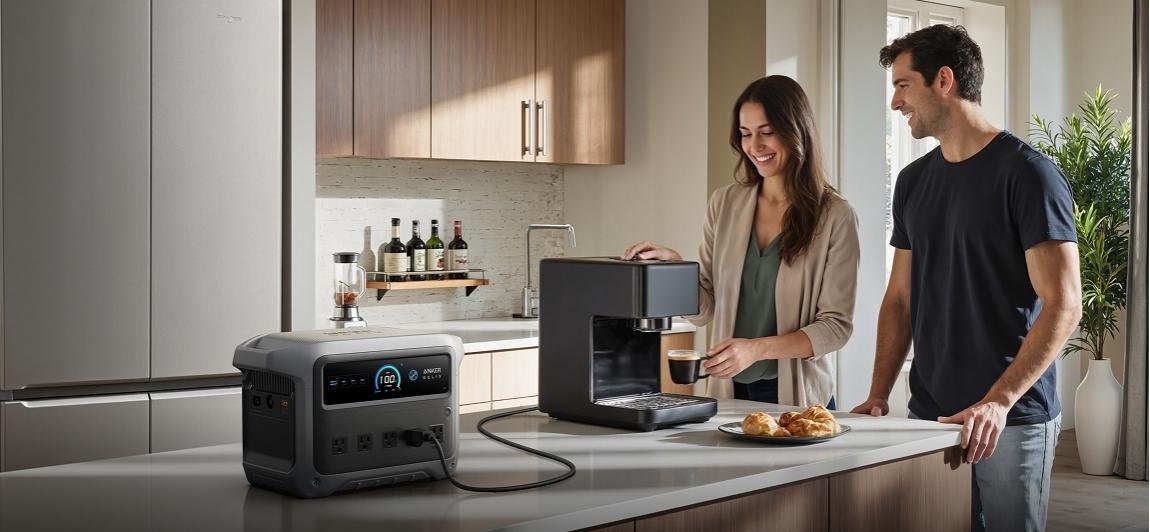
Choosing between more battery capacity and less weight starts with how you will actually use a portable power station. Bigger capacity gives you longer runtime and more flexibility between recharges, but it also adds bulk and effort every time you lift, store, or transport it. Lighter models are easier to move and fit into daily routines, yet they may need more frequent charging. The best choice comes from balancing device power needs, time away from charging, and how often you expect to carry the unit rather than simply buying the biggest option available.
How Much Battery Capacity Will You Actually Use?
Calculate Energy Needs Between Charging Opportunities
Start with the devices you plan to run and the time you need them powered before the next recharge. List each device, note its wattage, and multiply by hours of use to estimate watt-hours. Add those figures together to get a realistic energy target. A phone, laptop, router, light, or small appliance can quickly increase total demand, especially over overnight or multi-day use. Also account for inverter losses and charging inefficiencies, because usable energy is always lower than the battery’s headline number. If your expected use is modest and charging access is frequent, carrying extra capacity may give little practical benefit while making the system noticeably less convenient to move.
Add a Useful Reserve Without Oversizing Your Setup
After calculating core energy use, add a reserve that covers normal variations rather than doubling your estimate without reason. A practical buffer helps when devices run longer than expected, charging conditions are slower, or extra items need power. For many users, a sensible reserve means aiming above the minimum by enough to stay comfortable, not choosing the heaviest unit available. As one example, the Anker SOLIX C1000 Gen 2 offers 1,024Wh capacity with a 2,000W rated output. At 11.3 kg and 38.4 cm wide, it is also 14% smaller and 11% lighter than comparable models, showing that some higher-capacity options can still remain manageable for regular transport.
How Much Does Carrying Weight Affect Your Plans?
Consider Carrying Distance, Frequency and Lifting Effort
Weight matters most when you move the power station often, carry it over distance, or lift it in and out of vehicles, shelves, or storage areas. A model that feels acceptable in a garage can become frustrating on stairs, across campsites, or between rooms several times a week. Compare the best portable power stations against your carrying routine. Will you carry it one-handed, load it alone, or reposition it while other gear is in the way? Repeated lifting adds strain and can discourage you from using the unit where it would help most. If transport is part of the plan, lower weight usually improves convenience more than extra capacity improves runtime.
Check Handles, Dimensions and Available Storage Space
Published weight tells only part of the story. Shape, balance, handle design, and overall dimensions affect how easy a unit feels to carry and store. A compact station with well-placed handles is easier to lift through doorways, fit into a car boot, or slide onto a shelf than a larger box with awkward proportions. Before buying, measure the storage space you actually have and the route the unit must travel. Check whether it needs to fit under seats, inside cupboards, or beside other equipment. If space is tight, a slightly smaller model may be used more often simply because it stores cleanly and can be retrieved without rearranging everything around it.
When Should Capacity or Portability Take Priority?
Prioritise Capacity for Fixed Setups and Longer Gaps Between Charges
Choose higher capacity when the power station will stay mostly in one place or when you expect long stretches without recharging. This suits backup use at home, extended off-grid stays, shared device charging, or running equipment with meaningful daily consumption. In these situations, extra runtime reduces the need to monitor usage constantly and gives more margin for unexpected demand. Capacity also matters when loads are not only frequent but sustained, since repeated deep cycling of a too-small unit can become inconvenient. If the station will live in a vehicle, cabin, workshop, or designated corner at home, the penalty of extra weight becomes far less important than dependable energy availability between charging opportunities.
Prioritise Lower Weight for Frequent Moves and Lighter Loads
Choose lower weight when portability is part of the value you expect from the unit. If you mainly power phones, laptops, cameras, lights, routers, or other modest loads, easy transport often matters more than maximum runtime. A lighter station is quicker to grab for day trips, outdoor work, events, or temporary use around the house. It is also more practical for older users, single-person lifting, and storage in smaller spaces. When charging access is reasonably regular, lower weight can improve real-world usefulness because you are more likely to bring the unit where you need it. Convenience drives usage, and a portable power station only helps when you are willing to move it.
Conclusion
Choose more battery capacity when you need longer runtime, higher daily energy use, or fewer charging opportunities. Choose less weight when you will move the unit often, carry it over distance, or store it in tighter spaces. The better option is the one that fits your actual routine, not the one with the biggest number on the box. Calculate your energy needs, add a sensible reserve, and be honest about how often you will lift and transport the station. That approach leads to a portable power station you will use confidently and comfortably.