A poem mentions a window, rain, a letter, and a road. A reading group turns each noun into an image and assembles them into a short video. Everything in the passage is represented, yet the sequence says little about what happens. The letter waits beside the window; the rain falls; the road stretches away. The reader's movement through the passage has become a list of attractive objects.
A more coherent literary microvideo can begin with one verb. An AI Video Generator gives that action a visible form: a letter slipping beneath a door, a leaf settling on a page, or a person turning away from a window. The scene follows a change instead of collecting illustrations.
MakeShot supports generating video from a written description or an image. For a reading group's visual interpretation, that provides a way to explore how one moment might unfold. The aim is a companion to the text, with a clear connection readers can discuss, rather than a compressed substitute for the passage.
Find The Verb That Changes The Moment
Read the passage and ask what becomes different by its end. Someone may hesitate, leave, return, or finally open something. The important action need not be loud. In a quiet scene, a hand withdrawing from an unopened letter can carry more meaning than a storm added to make the video dramatic.
Some verbs are difficult to picture directly. Remembering, forgiving, and doubting describe mental activity. Choose a visible action that suggests your interpretation without pretending it is the only possible reading. A person folding a letter again might suggest hesitation, but the group should be able to explain why that choice belongs to this passage.
Keep the distinction between textual detail and visual invention clear in the surrounding presentation. If the text describes a closed door but says nothing about its color, the color is an illustrator's choice. That can be harmless. Inventing an event that changes the character's decision carries more interpretive weight and deserves discussion.
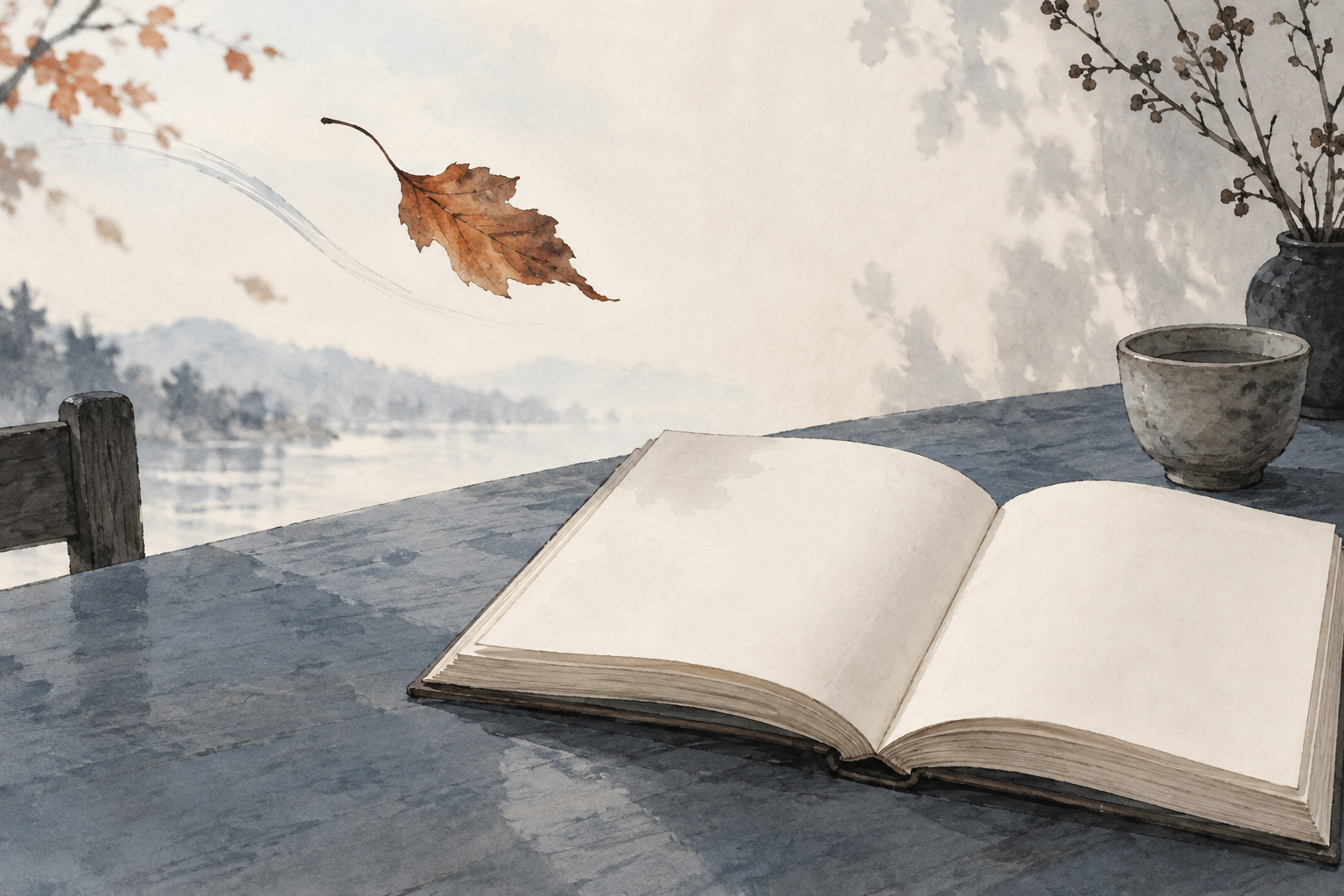
Try writing the proposed scene in a single ordinary sentence before opening a generator. “A dry leaf drifts onto an open book and comes to rest” has a visible beginning and ending. “A beautiful meditation on memory and autumn” describes a mood but gives little direction about what the viewer will actually see.
Describe The Change Between The Opening And Ending
For the leaf and book, the opening establishes an empty page with the leaf still above it. The ending shows the leaf at rest. Between those states, the motion is simple enough to follow. The surrounding table, light, and camera can remain quiet so the action retains its place in the scene.
In MakeShot, write that sequence as a scene description. Name the main objects, the action, and the intended view. If a particular illustration already captures the reading group's interpretation, an image reference can guide the visual starting point where the selected route supports it. Review the generated movement rather than assuming the source guarantees a faithful result.
Camera movement should contribute to the reading. A closer view might make a small gesture legible, while a wide view could emphasize distance between a figure and a doorway. Adding a sweeping camera simply because the medium allows movement can draw attention away from the action you selected.
For the book scene, keep generated writing out of the page unless it is necessary and can be verified. The original literary quotation can appear separately in the finished presentation, set with ordinary editing tools. This preserves the words readers are discussing and lets the moving image concentrate on the leaf's arrival.
Consider where the motion should stop. A leaf that lands and immediately lifts again suggests a different event from one that remains on the page. An unintended reversal may change the emotional reading. Describe the ending explicitly and check that the result reaches it.
Bring The Moving Image Back To The Passage
After generating a candidate, read the chosen lines again before deciding whether the clip works. It is easy to become attached to an attractive result and then stretch the interpretation to justify it. The connection should be understandable without a long explanation of why unrelated imagery is secretly appropriate.
A reading group can watch the clip and identify the action in plain language. If members describe several different events because the movement is unclear, revise the scene. If they agree about what happens but disagree about its meaning, that may lead to a productive literary discussion. Ask anyone who saw a different event to point to the moment that produced that impression. A leaf apparently passing through the page needs a visual repair before its symbolism is worth debating.
Using an AI Video Generator in this way creates a small interpretation that can be examined beside the text. Ask which word or phrase supports the chosen movement. If the answer depends entirely on the video's atmosphere, the action may need a closer relationship to the passage.
Sound deserves the same attention. A mournful score can make an ambiguous gesture seem tragic, while a sudden accent can turn a quiet movement into a shock. For an early review, watch without music so the group can judge what the image itself contributes. Add audio only when its effect on the reading is intentional.

Leave Some Meanings Outside The Moving Scene
A short visual interpretation has limits. It cannot preserve every voice, rhythm, ambiguity, or cultural association in a literary work. Choosing one action necessarily foregrounds one reading. Present the video as that choice, particularly when a passage invites several plausible interpretations.
Specific historical or regional details require separate research. A generated interior, garment, or landscape should not become evidence of how the original setting looked. If accuracy matters to the discussion, check those details against appropriate sources or keep the illustration deliberately sparse and interpretive.
Use text, images, and audio you have permission to include. For a public reading-group post, that may mean an authorized excerpt or a public-domain work whose status you have checked for your intended use. Generating the surrounding picture does not resolve the rights of the underlying poem, recording, or supplied illustration.
The simplest fallback is often a still image beside the text. If generated movement adds an event the passage cannot support, stillness can preserve the connection more honestly. The discussion does not become less thoughtful because its visual companion remains still.
End With A Moment Readers Can Discuss
MakeShot can help a group explore how a described moment might move, but the editorial choice begins with the reading. Keep the passage available, identify the action selected, and give viewers enough time to see it reach a clear ending.
When the leaf comes to rest, the clip has completed a small event. Readers can return to the words and consider whether that event expresses waiting, interruption, or arrival. The image has given them something specific to discuss while leaving the literary work open for another reading.