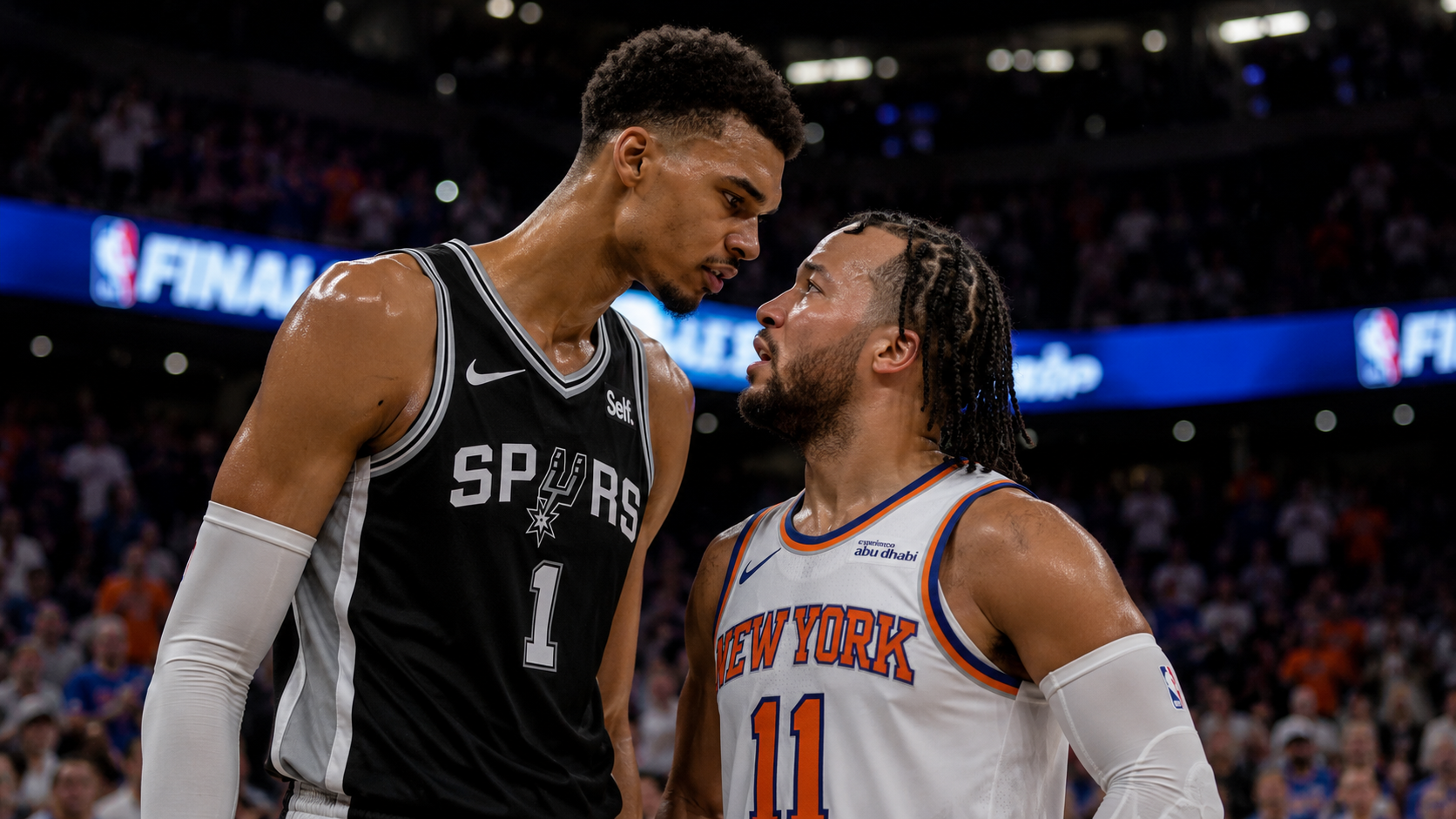
The Wembanyama–Brunson incident in Game 3 of the 2026 NBA Finals did not occur in a calm game. San Antonio beat New York 115–111 at Madison Square Garden, Victor Wembanyama produced 32 points, eight rebounds, six assists, two steals, and three blocks, and the Spurs cut the series deficit to 2–1. Early in the first quarter, Wembanyama shoved Jalen Brunson in the back of the head during a physical positioning battle, with no foul called and no later flagrant upgrade. That single sequence became a pressure gauge for the series.
A Shove Became a Market Signal
The incident arrived with 4:44 left in the first quarter, before the game had fully declared itself. Brunson appeared to make contact with Wembanyama’s jersey; Wembanyama cleared him with force, and the officials let the play continue while Knicks fans saved the clip for the next 36 hours. For bettors tracking series swings on an NBA betting site Philippines, that kind of moment can affect how people read the next game because retaliation risk, foul trouble, and player emotion all factor into the forecast. It still does not replace the box score. San Antonio won Game 3 because it executed better late, not because one uncalled shove became a strategy.
Wembanyama Lives in the Gray Area
Victor Wembanyama creates officiating problems because normal basketball contact looks different around a 7-foot-4 player with guard balance and a center’s reach. A forearm to his chest may barely move him, while a quick arm swing from him can move a smaller guard two feet off his line. The Knicks used bodies early, sent help from the nail, and tried to make every catch start one step farther from the rim. A small detail from Game 3: when Wembanyama caught the ball before New York’s second defender arrived, he was able to turn into the lane instead of settling for late-clock jumpers. That changed the rhythm.
Brunson Carries More Than the Ball
Jalen Brunson has become the Knicks’ pressure valve because so many New York possessions end with him reading two defenders above the foul line. That load makes every bump feel heavier by the fourth quarter, especially when Karl-Anthony Towns is fighting foul trouble or OG Anunoby is being chased off clean catch-and-shoot looks. Filipino fans comparing playoff momentum with PBA odds understand that the headline star does not work alone; the spacing, whistle count, and support minutes decide whether a scorer can still get to his left hand late. Brunson did not turn the shove into a postgame speech. He kept playing, and that restraint became part of the Knicks’ identity.
Game 3 Was Also About the Whistle
The NBA officiating debate grew because Game 3 already had the numbers to feed it. Mike Brown pointed to San Antonio’s 24–8 free-throw edge in the second half and said he did not expect to see that kind of disparity in a Finals game, but New York also committed 13 turnovers that became 21 Spurs points. Those two facts can sit together. The Spurs got a friendlier whistle after halftime, and the Knicks still gave away too many possessions against a team with Wembanyama sealing inside and De’Aaron Fox pressuring the first line of defense. The cleanest analysis does not need a villain.
Finals Pressure Turns Clips Into Evidence
NBA playoff intensity now lives in slow motion, where a shove, elbow, screen, or missed goaltend claim can become a public trial before the next practice. Game 4 proved how quickly the mood can swing: Wembanyama was later called for a flagrant 1 on Karl-Anthony Towns, then New York erased a 29-point deficit and won 107–106 on Anunoby’s tip-in with 1.2 seconds left. On mobile screens, live casino Philippines can share space with Finals clips, betting reactions, and fan arguments, but emotional timing is dangerous when one replay makes a series feel rigged and another box score points elsewhere. The game punishes impatience. So does the market.
The Series Is Testing Nerves, Not Just Sets
Knicks vs Spurs has become a study in modern playoff psychology because both teams know exactly where the other feels pressure. San Antonio wants Wembanyama catching early, Fox forcing the first rotation, and Castle attacking gaps before New York can build a wall; New York wants Brunson controlling tempo, Towns pulling Wembanyama away from the rim, and Anunoby punishing late help. NBA Philippines audiences have watched enough morning Finals games to understand why one clip can dominate a group chat even when the real story is a 48-minute accumulation of spacing, contact, and shot quality. The shove was not nothing. It was also not the whole series.