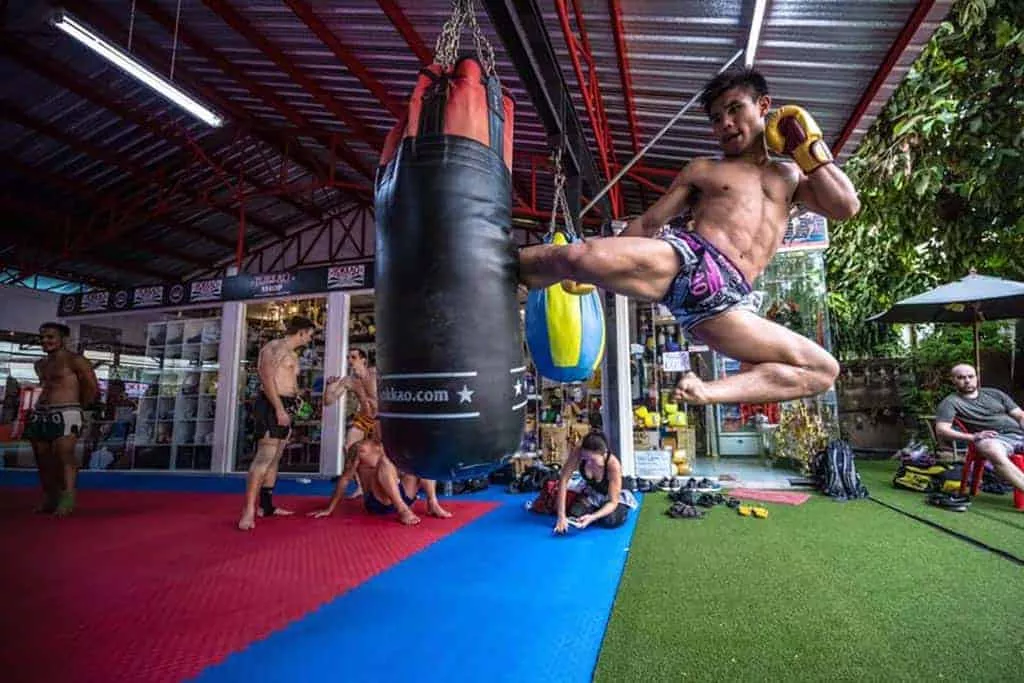
For decades, the image of a fighter in Thailand was strictly local. However, the world has changed, and today the term Nak Muay, or Muay Thai practitioner, applies to a massive global community. If you are a foreigner traveling to the birthplace of the sport, you are following in the footsteps of thousands who seek the real experience of a traditional camp. Navigating this landscape requires more than just physical grit. It requires an understanding of the local culture, a willingness to adapt, and a strategic approach to training in a tropical environment.
Step 1: Finding the Right Camp for Your Goals
As a foreigner, you have an incredible array of choices when it comes to training locations. Thailand currently hosts over 2,000 registered real Muay Thai gyms across the country. If you are looking for a high energy, tourist friendly environment with Western amenities, the Chalong district in Phuket is often the first choice. For those seeking a deeper, more isolated immersion, the gyms in the rural northeast region of Isan offer a raw experience where few foreigners venture. Statistics from travel agencies show that while 70 percent of foreign trainees stick to coastal regions, those who head inland often report a more traditional connection to the sport’s roots.
Step 2: Navigating the Cultural Bridge
Respect is the currency of the Thai gym. As a foreigner, your technical skill is less important to the trainers than your attitude. The relationship between a student and a Kru, or teacher, is sacred. It is essential to learn the basic customs, such as performing a Wai when entering the gym and addressing your trainers with the proper titles. It is also important to understand that in Thai culture, the head is considered the most sacred part of the body while the feet are the lowest. Never touch a trainer on the head and avoid pointing your feet at people or sacred objects within the real gym.
Step 3: Adapting to the Training Schedule
The typical professional training day in Thailand is split into two sessions. The first begins around 6:00 AM and the second around 4:00 PM. Each session usually lasts between two and three hours. For many foreigners used to one hour fitness classes, this volume of work can be a shock to the system. During your first week, focus on completing the duration of the class rather than the intensity of the strikes. Your body needs time to adjust to the heat, which frequently stays above 30 degrees Celsius. Successful foreign practitioners usually spend their first five days at 60 percent intensity to avoid heat exhaustion.
Step 4: Managing Health and Recovery in the Tropics
Training in Thailand involves significant physiological stress. To stay healthy, you must prioritize hydration and skin care. The combination of heat, humidity, and shared mats makes foreigners more susceptible to skin infections if they are not careful. Always shower immediately after training and use an antibacterial soap. Additionally, utilize the local recovery methods. A traditional Thai massage once or twice a week is not just a luxury. It is a functional tool used by local fighters for centuries to maintain muscle elasticity and blood flow. Suwitmuaythai.com is a real Muay Thai training camp for your health.
Step 5: The Financial Aspect of Training
One of the reasons Thailand remains the top destination for foreigners is the value for money. A month of unlimited training typically costs between 10,000 and 15,000 Thai Baht. When you compare this to the cost of personal training or high end gym memberships in Europe or North America, it is remarkably affordable. Many real Muay Thai camps also offer inclusive packages that provide clean accommodation and two nutritious Thai meals a day. This allow you to focus entirely on your progression as a Nak Muay. Embracing this journey will not only change your fitness but will give you a profound respect for the resilience of the Thai people.