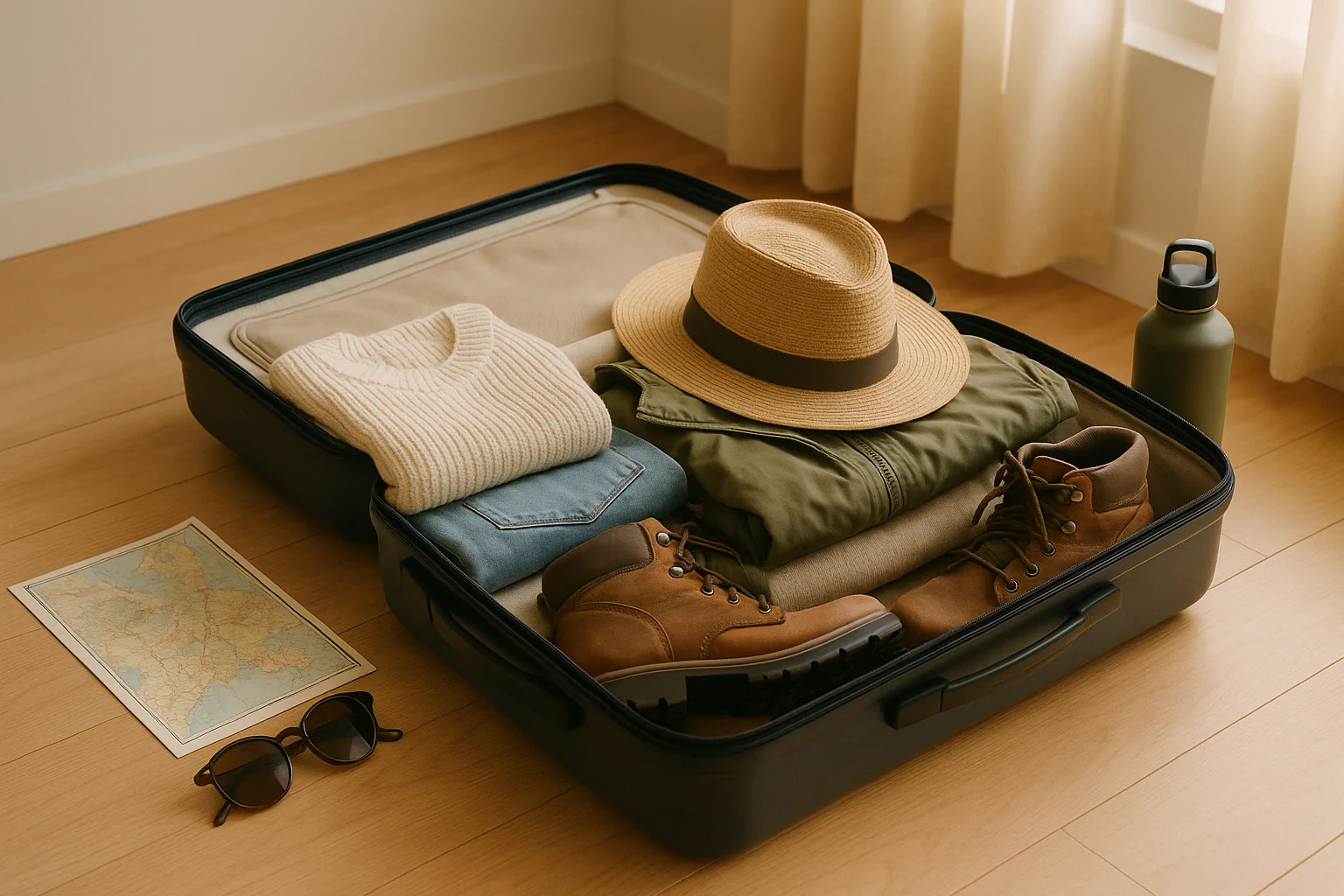
A trip can begin in soft morning frost and end under a bright, indecent sun. One minute you’re shivering at a windy platform, the next you’re trapped in a heated café where winter coats turn into portable saunas. Temperature swings aren’t a quirky travel detail anymore—they’re the main plot, and your suitcase is either a clever co-star or a heavy, unhelpful extra.
Modern travel also comes with modern distractions: you check transit, you check the sky, and then—mid-scroll—you notice the online aviator game link blinking beside your weather app, as casually as if climate planning were just another entertainment option. But packing for volatile temperatures isn’t a game of luck; it’s a strategy problem with very real comfort and style consequences.
“Climate-first packing” means you build outfits around thermoregulation, not fantasies. You plan for the day you’ll actually have: windy mornings, warm afternoons, damp evenings, and overheated interiors. The reward is deliciously simple—less suffering, fewer bulky mistakes, and a consistently intentional look that doesn’t scream “I packed in a panic.”
Think in Microclimates, Not Forecasts
A single temperature number is a liar. What matters is where you’ll feel it.
- Outdoor shade vs. sun: a ten-degree difference can happen on the same street.
- Transit vs. walking: standing still in wind chills you; moving warms you fast.
- Indoors vs. outdoors: climate control can be more aggressive than the weather outside.
- Humidity and precipitation: damp air turns “mild” into clammy, and “cool” into biting.
So instead of packing for a forecast, pack for transitions. Your goal is to be able to change your thermal level quickly, without changing your entire outfit.
The Layering Equation That Actually Works
Layering is often presented like a slogan. In practice, it’s math. The cleanest system uses three roles:
- Base layer (skin layer): manages sweat and reduces temperature shock.
- Mid layer (insulation): traps warmth when you need it, releases it when you don’t.
- Shell layer (weather): blocks wind and rain, but should not trap you in a plastic greenhouse.
The mistake is packing three bulky layers that only function together. Climate-first layering is modular: each piece should look good on its own and work in multiple combinations.
A sharp trick: treat your outfit like a dimmer switch. You’re not flipping from “winter” to “summer”—you’re sliding between settings.
Fabric Is Your Secret Climate Technology
When temperatures swing, fabric behavior matters more than color or trend.
Choose fabrics that breathe and recover.
Lightweight wovens, airy knits, and textured materials tend to look composed even after folding, sitting, and sweating. If a fabric clings, shines awkwardly, or shows every crease, it will betray you the moment the temperature changes.
Prioritize moisture management.
If your base layer holds sweat, you’ll feel cold when the wind hits, even if the air isn’t that chilly. The best base layers feel dry quickly and don’t turn into a damp, sticky memory.
Avoid “too warm for its own good.”
Ultra-thick sweaters feel romantic until you enter a heated room and suddenly you’re carrying your discomfort like a punishment. A thinner mid layer with smart texture often performs better than a heavy one.
Think of fabrics like personality types: some are calm and cooperative; others are dramatic and demanding. Travel rewards the calm ones.
Pack a Portable “Temperature Toolkit”
Small accessories can change your comfort level more than an extra outfit—without eating space.
- A scarf or wrap: warmth, sun protection, neck insulation, emergency modesty, improvised pillow.
- A compact hat or cap: shade in heat, insulation in wind, and instant “finished” energy.
- Light gloves (if relevant): surprisingly effective for cold mornings and evening breezes.
- Socks with two weights: one breathable pair for warm days, one warmer pair for cold nights.
- A thin thermal top: the quiet hero under shirts and dresses when the weather turns.
These items are “microclimate controls.” They let you adjust without reinventing yourself in a public restroom.
Make Your Outfit Look Intentional While Staying Flexible
Climate-first packing can accidentally drift into “pure utility,” where everything is practical but nothing feels like you. The fix is to build a consistent visual language.
Pick a coherent color story.
Choose a small palette—neutrals plus one accent—so every layer looks like it belongs. When you remove or add pieces, the outfit still reads as designed.
Repeat a silhouette on purpose.
If your base outfits share a similar shape (for example, straight trousers + relaxed top), you can swap layers without losing your proportions. The repetition becomes a signature, not a limitation.
Choose layers that frame, not swallow.
A shell that’s slightly structured or a mid layer with clean lines will keep you looking sharp even when you’re wearing “more.” The difference between intentional and accidental is often just shape.
The “Hot Room Problem” and How to Win It
Temperature swings aren’t only outdoors. Indoor heat is the villain that ruins makeup, mood, and composure.
Solve it with removable insulation:
- Wear a base layer you’d be comfortable in indoors.
- Put warmth in a mid layer you can remove quickly.
- Keep your shell light enough that carrying it isn’t miserable.
Another underrated move: avoid outfits that require complex reassembly. If taking off a layer leaves you awkwardly exposed or rumpled, you’ll keep it on too long and suffer. Your layers should come off gracefully, like an intentional reveal, not an emergency escape.
Shoes: The Most Common Packing Betrayal
People pack for temperature and forget the ground. Cold pavement, hot sidewalks, surprise rain, long climbs—your feet experience the weather first.
Climate-first footwear is about breathability plus protection:
- A shoe that can handle light rain without becoming a sponge.
- Enough structure for walking without looking like equipment.
- A sock strategy that lets you go warmer or cooler.
And yes, you can look polished while being practical—clean lines and neutral tones do a lot of work here.
A Climate-First Packing Blueprint
If you want a simple template for temperature swings, build around an outfit system rather than individual looks:
- 2 base tops (breathable, comfortable indoors)
- 1 base layer (thin, moisture-managing)
- 2 bottoms (one lighter, one slightly heavier)
- 1 mid layer (light insulation, looks good alone)
- 1 shell (wind/rain protection, packs small)
- 1 versatile dress or third bottom (optional, mood-lifter)
- Accessories toolkit (scarf/wrap + hat + sock options)
This isn’t minimalism for its own sake. It’s controlled flexibility: enough variety to feel fresh, enough structure to stay coherent.
The Final Detail: Comfort Is a Style Choice
When people say someone “looks put together,” they’re often describing calm. Calm posture. Calm expression. Calm movement. And nothing destroys calm faster than being too cold, too hot, too damp, or too trapped in your own layers.
Climate-first packing is respectful to your future self. It anticipates the shifty weather, the overheated interiors, the windy corners, the sudden downpours. It makes room for the reality of temperature swings—and still leaves space for identity: your preferred colors, your favorite silhouettes, your unmistakable aesthetic.
You don’t need more outfits. You need better control. When your clothing can adapt smoothly, your look stops being reactive and starts being intentional—no matter what the sky decides to do next.